What if the key to unlocking quantum computers — those mythical machines promising to crack drugs and codes overnight — was just a tricked-out projector shrinking masterpieces to sand-grain scale?
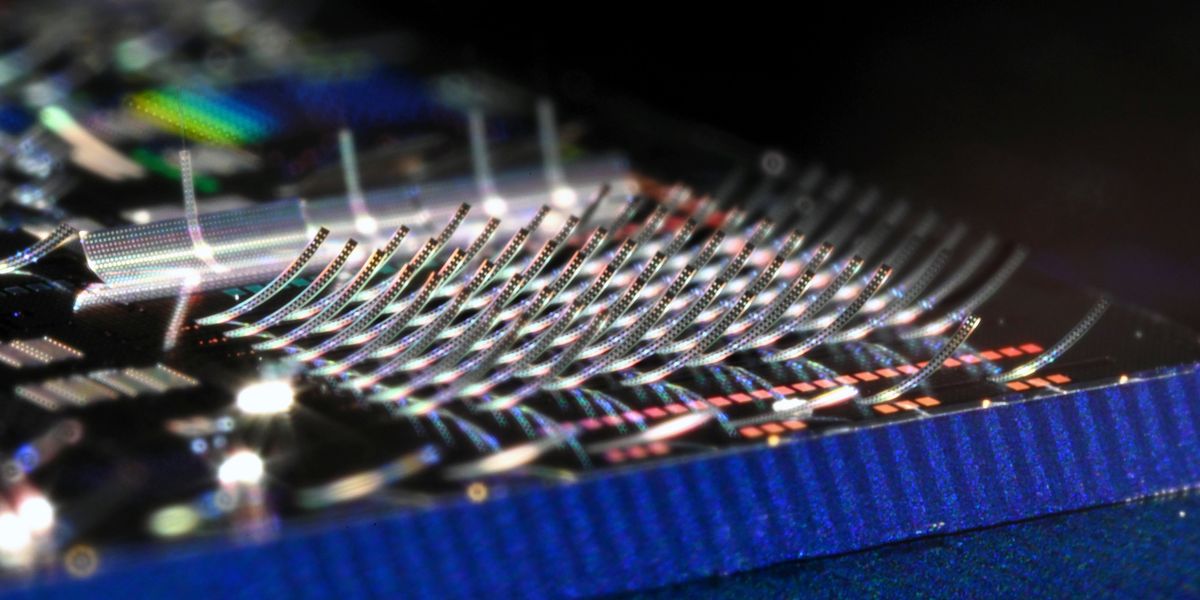
Yeah, you read that right. This photonic chip, born from the MITRE Quantum Moonshot crew, squeezes video onto a spot tinier than two human egg cells. Mona Lisa? Check. Charlie Brown Christmas clips? Done. All from a 1-square-millimeter slab of silicon wizardry. But here’s the thing — I’ve chased Silicon Valley’s qubit dreams for two decades, and lasers have been the bottleneck forever. Who’s actually cashing in?
How This Nano-Projector Actually Works
Look, forget the buzz. It’s an array of micro-cantilevers — think tiny ski-jumps curling 90 degrees off the chip. Voltage tweaks ‘em via piezoelectric aluminum nitride, bouncing light from waveguides into scannable beams. Each second? 68.6 million spots. That’s 50x better than clunky MEMS mirrors from the old days.
“When we started, we certainly never would have anticipated that we would be making a technology that might revolutionize imaging,” says Matt Eichenfield, one of the leaders.
Smooth engineering, they claim. Stress layers pop the cantilevers free, silicon dioxide bars keep ‘em straight. But syncing colors, timing beams for video? That chewed up real time, per MITRE’s Andy Greenspon.
Short version: It works. Barely.
And yet — projecting a 125-micrometer Mona Lisa feels like parlor magic, not prime time.
Can This Chip Tame Quantum’s Million-Laser Hell?
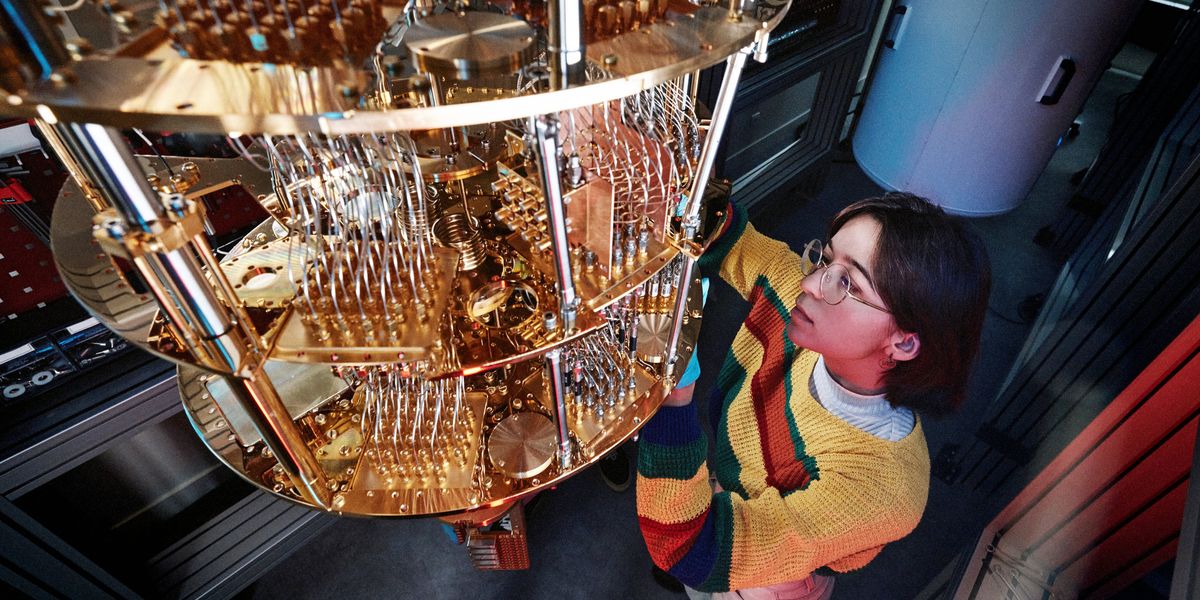
Quantum needs millions of qubits. Each? A laser pointer today. Nightmare. This chip scans beams over 2D arrays, slashing laser count since not every qubit demands attention 24/7.
Henry Wen, photonics whiz at QuEra, calls it diffraction’s limit. Fine. But scale to millions? Heat. Noise. Fabrication yields tanking at volume. I’ve seen this movie — Texas Instruments’ DLP micromirrors in the ’90s promised to remake displays, cinemas ate ‘em up, but quantum? Still vaporware after 30 years. Unique twist: This ain’t revolutionizing qubits unless DARPA foots endless bills. Moonshot’s gov-backed; startups won’t touch it without profits.
Wen pushes 3D printing too — thousands of beams vs. one slow laser, hours to minutes. Sounds peachy. Reality? Powder beds warp under that density. Hype.
So, quantum savior? Maybe for labs. Cash cow? Doubt it.
Picture this sprawling challenge: Labs like Sandia, MIT, Boulder grinding years on diamond qubits, only to hit the control wall. Enter cantilevers — elegant fix, or elegant excuse for more grants? Eichenfield says fab was ‘pretty smooth,’ but that’s code for ‘we iterated hellishly.’ Wen dreams cantilever variants; sure, iterate away. Meanwhile, IonQ and Rigetti burn investor cash on cryostats, ignoring photonics entirely. Why? Because photons scatter in qubit traps. This chip steers light pre-trap — clever, but unproven at cryo-temps.
One punchy truth: No one’s making bank yet. Gov labs demo; VCs chase error-corrected logical qubits instead.
AR and Bio-Imaging: Real Money or Sci-Fi Sideshow?
Beyond qubits, AR glasses crave tiny projectors for retinal flicks. Biomedical? Scan cells without bulk. Wen’s excited — who isn’t?
But hold up. Apple’s Vision Pro ditched microdisplays for waveguide hell; Meta’s Orion prototypes ballooned headsets. This chip shrinks beams, sure, but power draw? Integration? Nobody mentions thermals killing wearables.
My bold call: It’ll niche into lab tools first, like old OLED microdisplays now in endoscopes. Not consumer disruption. PR spin screams ‘revolutionize everything,’ but Eichenfield admits they stumbled into imaging from quantum woes. Classic pivot.
And the money question — always my north star. MITRE? Fed contractor, stable gigs. Unis? Grants. QuEra? QPU hopefuls sniffing scalability. No fabless startup flipping this to Taiwan Semi yet. Smells like academic gold, not Valley unicorn fodder.
Why Does No One Care About Cantilever Shapes?
Wen teases new geometries — bars sideways, maybe helix curls? Cutoff in the original, but imagine: Phased arrays for holograms? Wild.
Cynical me yawns. Photonics iterates forever; diffraction wins. Remember MEMS hype cycles? Billions sunk, niches carved. This? Same script, quantum remix.
Still, 68 million spots-second crushes priors. If it ports to nitride platforms, AR implants beckon. But who profits? Not you, reader. Not soon.
🧬 Related Insights
- Read more: Brookhaven Lab Weaponizes Uncertainty for Smarter AI Molecules
- Read more: Samsung Electro-Mechanics Locks In Crucial Substrates for Nvidia’s Groq 3 LPU Push
Frequently Asked Questions
What is the MITRE Quantum Moonshot photonic chip? Tiny 1mm device projecting 68.6M light spots/sec via piezo cantilevers, aimed at qubit control and micro-imaging.
Can this chip make quantum computers scalable? Potentially fewer lasers for millions of qubits, but unproven at scale — heat, cryo issues loom large.
Will this tech hit AR glasses or 3D printers soon? Lab demos now; commercial? Years off, likely niche tools first, not mass market.