Look, when you hear “Broadcom buys FuriosaAI,” what you should really be asking is: what does this mean for actual humans building or using AI, and more importantly, who’s getting rich?
It’s another Tuesday in Silicon Valley, meaning another established giant is quietly absorbing a promising, or at least well-funded, startup. Broadcom, the titan of networking and custom silicon, has added South Korea’s FuriosaAI to its growing stable. On the surface, it’s about Broadcom beefing up its custom ASIC (Application-Specific Integrated Circuit) business. They’ll be leveraging FuriosaAI’s third-gen AI chips, which will apparently benefit from Broadcom’s “advanced packaging and networking tech.” Translation: Broadcom wants to sell you more than just the chip; they want to sell you the whole darn ecosystem, from silicon to network fabric, all wrapped up with their proprietary sauce. And who wouldn’t want that? Especially when it’s coming from Broadcom.
This isn’t just a casual acquisition; it’s a strategic play. Broadcom, under Hock Tan, has become an empire builder, often through shrewd, sometimes audacious, acquisitions. They’re not just in the business of making chips; they’re in the business of owning entire segments of the tech infrastructure. Think VMware, Symantec’s enterprise security business, and now, a piece of the AI hardware puzzle. They’re stitching together a formidable, vertically integrated offering that competitors will have to reckon with. It’s the classic “get big or get bought” mantra in action, played out on a grand scale.
Who’s Actually Making Money Here?
This is where my two decades covering this circus really kicks in. FuriosaAI, founded in 2017, raised a decent chunk of change, aiming to challenge NVIDIA in the AI inference chip space. They’ve talked a big game about efficiency and performance. But the harsh reality for most AI startups is that building and scaling chip manufacturing is astronomically expensive, and competing head-to-head with an incumbent like NVIDIA is like trying to out-swim a shark with a harpoon. Broadcom, with its deep pockets and existing customer relationships across telcos, cloud providers, and enterprise, offers a lifeboat – a very expensive, very lucrative lifeboat. Broadcom wins because they get access to FuriosaAI’s talent and IP, and can now offer a more complete AI solution to their massive customer base. FuriosaAI’s investors likely see a profitable exit, even if their grand vision of single-handedly dethroning NVIDIA is put on ice. And the end customer? They might get a more integrated, potentially more cost-effective solution, but they’re also becoming more reliant on Broadcom’s increasingly expansive tech kingdom.
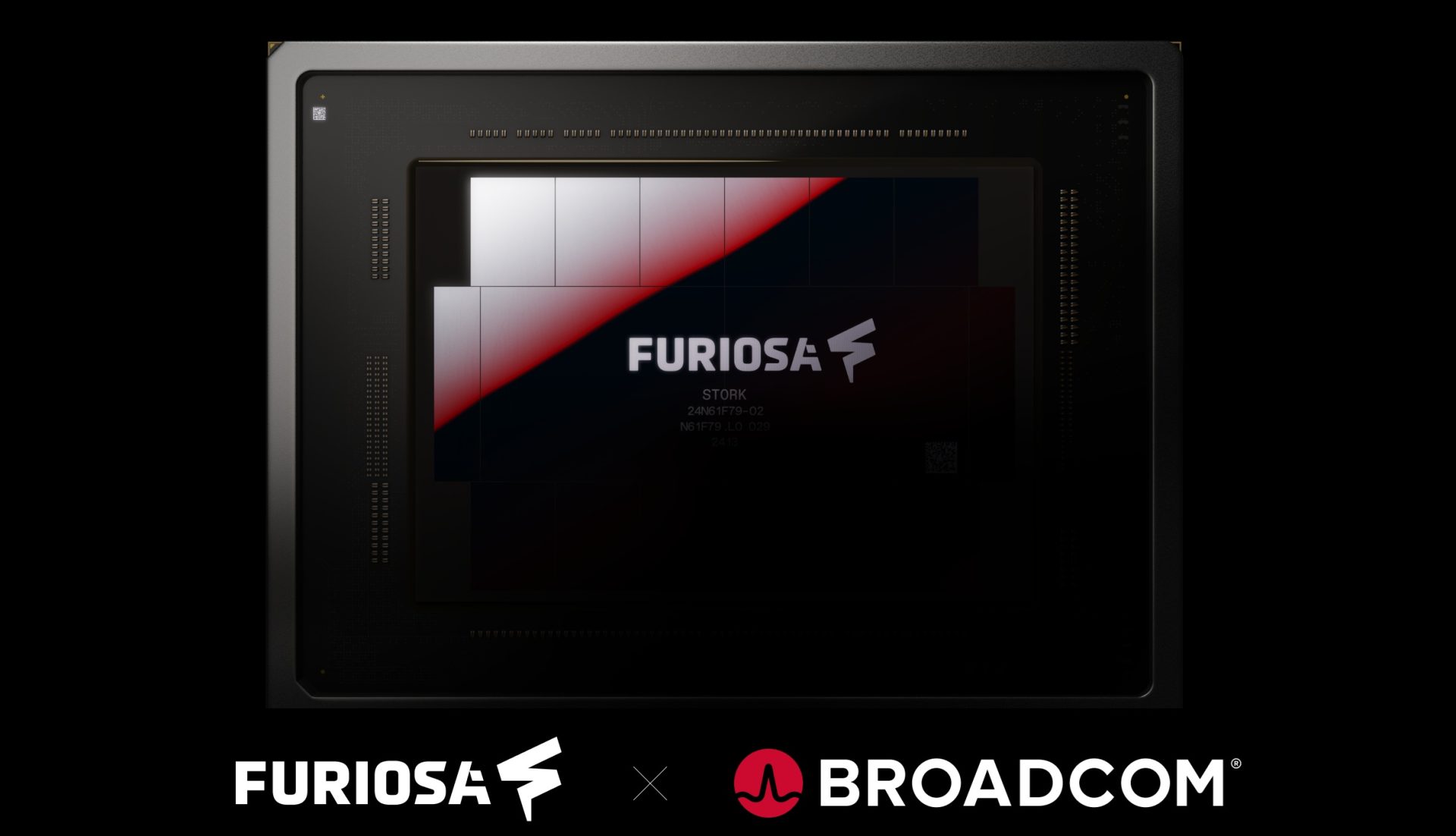
Broadcom’s custom ASIC business has secured a partnership with South Korea’s FuriosaAI, a move that will see the startup’s third-generation chips use Broadcom’s advanced packaging and networking technologies.
This deal highlights a trend I’ve been watching for years: the commoditization of core AI processing power is a pipe dream for many. Instead, the real money, and the real power, lies in the integration, the networking, the packaging – the stuff that makes the core processing actually work efficiently at scale. Broadcom is a master of this. They don’t just make chips; they make the highways and the intersections where those chips communicate. By bringing FuriosaAI’s inference capabilities under their wing, they’re not just adding a product; they’re extending their control over the AI data center’s nervous system.
Is This a Threat to NVIDIA?
Let’s be real. NVIDIA isn’t losing sleep over FuriosaAI, or even this Broadcom acquisition, in the grand scheme of things. NVIDIA has built an unassailable lead in AI training chips, an ecosystem of software (CUDA, anyone?), and mindshare that’s hard to crack. What Broadcom is likely targeting is the inference market – where AI models are deployed and run in real-time. This is a massive and growing market, and while NVIDIA is present, it’s less dominated than the training side. Broadcom’s play here is to offer a more complete, integrated solution that might appeal to enterprises who want to simplify their AI infrastructure. Think less about a direct NVIDIA killer and more about a formidable alternative that appeals to a different set of customer needs – perhaps those already deeply entrenched in Broadcom’s networking and infrastructure offerings. It’s about carving out their slice, not necessarily stealing NVIDIA’s entire pie.
What Does This Mean for Developers?
For the folks actually writing code and building AI models, the immediate impact is probably minimal. You’ll still be interacting with frameworks and libraries that abstract away the underlying silicon. However, the long-term implications are significant. As fewer, larger companies like Broadcom gain more control over hardware infrastructure, we could see less diversity in the underlying technologies developers have access to. It also means that if you do want to optimize for these specialized, integrated solutions, you’ll likely need to learn a new set of tools and understand a more complex, proprietary stack. It’s a double-edged sword: potentially easier integration, but also less openness and more vendor lock-in. And in this industry, vendor lock-in is just a fancy way of saying you’re stuck paying whatever the vendor decides to charge.
This acquisition is less about a flashy new chip and more about the business of chip infrastructure. Broadcom is playing the long game, building an integrated fortress. FuriosaAI is the latest brick. Time will tell if this makes AI more accessible or just more expensive and controlled.
🧬 Related Insights
- Read more: VSORA’s Jotunn8: Silicon That Starves Never Again for AI Inference
- Read more: Supplier Denies China Leak Amid Exec Lawsuit
Frequently Asked Questions
What does FuriosaAI actually do? FuriosaAI designs AI chips focused on inference, aiming to run AI models efficiently and at scale in data centers and edge devices.
Will this acquisition impact the cost of AI hardware? It’s hard to say definitively. Broadcom’s goal is likely to offer integrated solutions that may be more cost-effective for certain enterprise deployments, but it could also lead to less competition and potentially higher costs in specific segments.
Does this mean Broadcom is competing with NVIDIA directly? While both companies are involved in AI hardware, Broadcom’s strategy here seems more focused on the integration and networking aspects of AI infrastructure, potentially offering an alternative to NVIDIA’s dominant training and inference solutions, especially for customers already using Broadcom products.