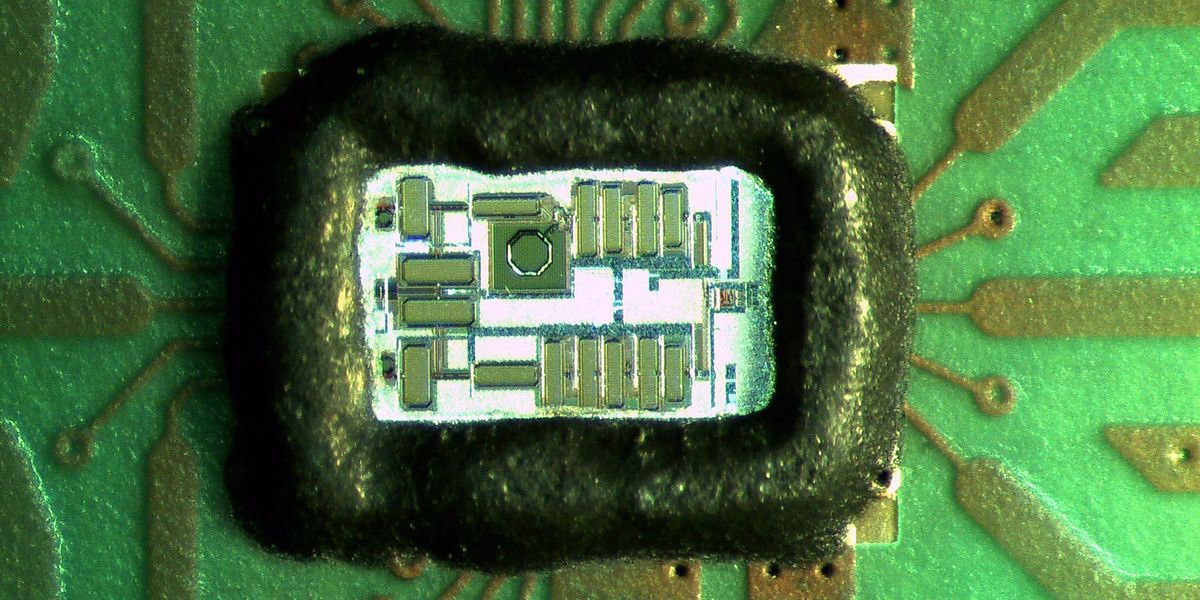
Intel’s Loihi 2 chips hum away in Sandia’s Oheo Gulch rig, spikes firing like neurons tackling the brutal math of partial differential equations. No GPUs gasping for breath here — just 20 watts doing what exascale behemoths dream of.
Zoom out. We’ve chased brain-like computing for decades, mimicking how our gray matter juggles sensory floods without a blackout. Sandia National Labs, neuromorphic whisperers, just proved these chips aren’t AI toys. They’re math beasts too.
The Brain’s Dirty Secret
Brains don’t crunch numbers like your laptop’s von Neumann bottleneck. They compute in the moment — analog-ish, event-driven, spiking only when signals scream importance. That’s the neuromorphic promise: ditch clock ticks, embrace chaos.
Sandia folks James Aimone and Brad Theilman nail it in their release:
“Pick any sort of motor control task — like hitting a tennis ball or swinging a bat at a baseball. These are very sophisticated computations. They are exascale-level problems that our brains are capable of doing very cheaply.”
Exascale. Cheaply. Words that make Cray engineers sweat.
Their Nature Machine Intelligence paper drops NeuroFEM: a spiking twist on the finite element method. FEM’s old-school for PDEs — modeling fluid flows, electromagnetic waves, molecular dances. Supercomputers eat gigawatts for breakfast on these. NeuroFEM? Runs native on Loihi 2’s neuromorphic guts.
Tested on Oheo Gulch — 32 Loihi 2s — it scales near-perfect. Double cores, halve solve time. 99% parallelizable, thumbing its nose at Amdahl’s law. And get this: users barely tweak their code. Plug in, spike out answers.
Why Do PDEs Love Neuromorphic Weirdness?
PDEs mock traditional chips. They’re sparse, iterative, screaming for in-memory compute. GPUs parallelize like mad, but power? A furnace. Neuromorphics wire neurons tight to synapses — data barely budges.
Loihi 2 hits 15 TOPS per watt. Sandia’s Hala Point and Oheo Gulch prove it. That’s 2.5x Nvidia Blackwell’s sip. SpiNNaker2? 18x GPU efficiency. But programming’s the killer — until NeuroFEM.
Here’s the thing. Authors crow:
“An important benefit of this approach is that it enables direct use of neuromorphic hardware on a broad class of numerical applications with almost no additional work for the user.”
User-friendly spikes. Who knew?
Sandia didn’t stop at theory. Real hardware, real PDEs (proof-of-concept, sure, but scaling’s legit). They sidestep neuromorphic’s analog dreams — Loihi’s digital — yet hint: go full analog, and complexity explodes, power plummets.
But wait — Sandia’s neuromorphic playground? They’ve rigged Intel, SpiNNaker, IBM TrueNorth. Past years, mostly AI. Now? Scientific meat.
One punchy truth: this echoes the 1980s connectionist revival. Back then, backprop hype crashed on scaling walls. Today? Loihi’s got million-neuron clusters. My bet — neuromorphics crack exascale scientific sims by 2030, starving GPU farms. (Bold? Sandia’s scaling says yeah.)
Critique time. Intel’s PR spins Loihi as AI kingpin, but Sandia’s showing broader chops. Hype meets reality — efficiency’s real, but infancy bites. Programmability? NeuroFEM patches it, yet full adoption? Years off.
Can Neuromorphic Supercomputers Dethrone GPUs?
Short answer: not tomorrow. But why? Architecture shift. GPUs vector-blast; neuromorphics event-spark. PDEs — diffusion equations, Navier-Stokes — thrive on local updates, neighbor chats. Spikes mimic that neighborhood gossip perfectly.
Oheo Gulch’s 32 chips? Toy scale. Hala Point’s 1152 Loihi 2s push 1.15 billion neurons. Power draw? Whisper. Compare Frontier’s 21 MW for exascale. Brain-scale cluster? Pocket change.
The why: memory walls crumble. In neuromorphics, weights live with compute — no DRAM treks. PDE grids map to neuron pools; iterations become spike trains. Efficiency soars because you’re not hauling bits across buses.
Downsides? Precision. Spikes are probabilistic; floating-point purists balk. NeuroFEM quantizes smartly, but tolerance needed. And tools — Nx SDK’s maturing, but CUDA it’s not.
Prediction: Sandia leads, DoE funds. By 2028, hybrid rigs mix GPUs and neuromorphics for PDE-heavy codes. Climate models, fusion sims — power hogs first to flip.
Look, corporate spin calls neuromorphics “future.” Sandia’s data screams now-ish. Intel’s Loihi 2 isn’t vapor; it’s solving real PDEs today. Versatility unlocks doors — beyond ML, to the math heart of science.
Yet skepticism: proof-of-concept screams early days. No head-to-head vs. Frontier-scale. Efficiency peaks at niche loads. Still, 99% scaling? That’s architecture gold.
Roadblocks and Ramps
Programming hell? Mitigated. Analog leap? Coming. Sandia eyes SpiNNaker2’s wafer-scale dreams.
Unique angle: this parallels ARM’s mobile conquest. GPUs ruled servers; ARM starved on power. Neuromorphics? The ARM for brains — sparse, async compute. Supercomputers next.
What Limits Scale in Brain Chips?
Amdahl lurks — serial bits kill parallelism. NeuroFEM dodges, but not forever. Noise in spikes? Averaged out. Fabrication? Loihi’s 4nm-ish; analog needs photonics maybe.
Sandia pushes. Waste heat salmon farms? Cute, but neuromorphics laugh — room-temp, no chillers.
Deep dive done: neuromorphic PDEs aren’t gimmick. They’re the how of efficient exascale. Why? Biology’s been there 500 million years.
**
🧬 Related Insights
- Read more: Nvidia Drops $26M on Open Agentic AI to Own the Future
- Read more: H100 Humiliates GB200 NVL72: Benchmarks Expose Power Hog and Flop Factory
Frequently Asked Questions**
What are partial differential equations used for?
PDEs model real-world physics: fluid dynamics in turbines, radio waves in buildings, molecular electrostatics. Supercomputers live on ‘em.
How efficient are Intel Loihi 2 chips?
15 TOPS per watt — 2.5x modern GPUs. Sandia’s rigs prove it on PDEs.
Will neuromorphic computing replace supercomputers?
Not fully, but hybrids likely by 2030 for power-hungry scientific workloads.