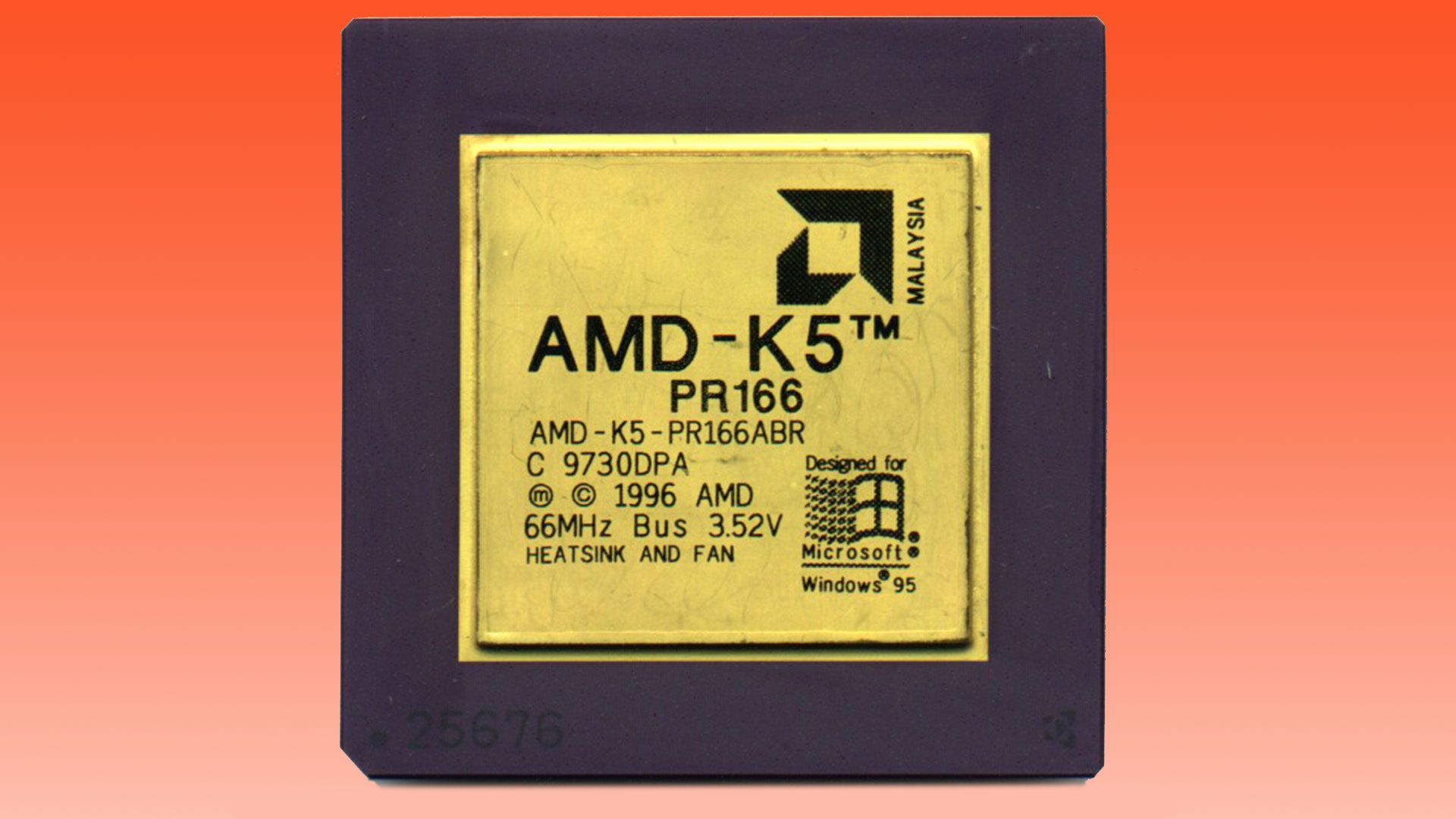
And just like that, the venerable AMD K5, that scrappy underdog of early x86 silicon, is getting the digital boot. Linux kernel 7.2 is set to drop support for the 4.3-million-transistor chip, a move first flagged by the ever-vigilant Phoronix. The official reason? It lacks a Time Stamp Counter (TSC), a seemingly minor detail that’s become a major thorn in the side for developers trying to wrangle modern code onto ancient hardware.
Look, we’ve all seen the PR spin. “Innovation,” “advancement,” “the future.” But sometimes, the most newsworthy thing is what’s being removed. The K5, bless its transistor-laden heart, was AMD’s maiden voyage into designing its own x86 guts. A big deal, sure. A successful one? Not exactly. It landed late, felt sluggish against the Intel Pentium juggernaut of its day, and frankly, most folks weren’t buying them by the truckload.
Still, you have to give AMD credit for trying. This chip, cobbled together with a RISC-based core that chewed up x86 instructions and spat out micro-ops, was ambitious. Launched in 1996 with clocks that topped out at a dizzying 133 MHz, it was already playing catch-up. Its saving grace, if you can call it that, was beating out the Cyrix 6x86. A pyrrhic victory, perhaps.
Remember those ‘Performance Rating’ numbers? A K5 PR166 wasn’t actually running at 166 MHz, but was supposedly as fast as a Pentium running at that speed. A bit of marketing snake oil, but typical for the era. It also cemented the necessity of heatsinks and fans for CPUs – another innovation that was less a feature and more a sigh of resignation.
More Than Just the K5: The Great Unplugging Continues
This isn’t some isolated incident. Just last month, the Linux kernel waved goodbye to the Intel i486, a chip that’d been around for a good 37 years. That was likely a bigger deal, considering how many i486s actually shipped. The K5’s retirement is more of a symbolic ending for a particular lineage, a footnote in the grander narrative of processor evolution.
And it’s not just AMD’s K5. The AMD Elan SoCs, those i486-class chips for embedded systems that also skipped the TSC, are also slated for the chopping block in kernel 7.2. Same goes for the AMD Geode x86 embedded processors, the Elan’s spiritual successors. It’s a general culling of the technologically… un-equipped.
It’s easy to get sentimental about old silicon. We’re in the middle of this endless RAM upgrade cycle, and seeing older hardware fade away is, I guess, a little sad. But let’s be honest: these machines, with their missing TSCs and glacial clock speeds, aren’t exactly going to be running your next AI training session. They’re destined for hobbyist projects, retrocomputing shrines, or just gathering dust. And that’s fine. Not everything has to be on the bleeding edge.
The lack of TSC (Time Stamp Counter) in the K5 apparently makes it a burden for developers to support in the kernel.
This whole kerfuffle boils down to one simple, often overlooked, truth in tech: obsolescence. The K5’s fundamental architecture, while groundbreaking for its time, simply wasn’t built with the future in mind. The TSC is a tiny piece of hardware that tells the system what time it is, with incredible precision. Without it, modern operating systems – and the applications that rely on them – have to jump through hoops to get accurate timing. It’s like trying to build a skyscraper with a hammer and chisel when everyone else has power tools. Eventually, the old tools just don’t cut it anymore.
Who’s Really Making Money Off This?
Let’s cut through the noise. This isn’t about sentimentality for aging hardware. This is about the Linux kernel, a massive, actively developed open-source project, shedding baggage. Developers, who are the real product here—their time and effort are the currency—need to focus on current and future hardware. Maintaining support for chips that less than a handful of people are actively using simply isn’t an efficient use of resources. The companies that do make money are those building the new processors, the ones with all the latest bells and whistles, the ones that don’t require kludgy workarounds. AMD moved on from the K5 over two decades ago, and the kernel developers are just following suit.
The K5’s legacy is less about its technical prowess and more about its role as a stepping stone. It proved AMD could compete on the x86 battlefield, even if that particular battle was lost. Its removal from the Linux kernel isn’t a tragedy; it’s a natural, albeit late, consequence of progress.
🧬 Related Insights
- Read more: Nvidia’s Asian Supply Chain Exposure Surges to 90%
- Read more: Amazon’s Secret $50B Chip Beast: Poised to Eclipse Intel?
Frequently Asked Questions
What is the AMD K5 processor?
The AMD K5 was AMD’s first independently designed x86 processor, launched in 1996. It featured a RISC-based internal architecture and aimed to compete with Intel’s Pentium processors.
Why is the K5 being removed from the Linux kernel?
It’s being removed because it lacks a Time Stamp Counter (TSC), a hardware component essential for accurate system timing in modern software. This lack makes it a coding burden for developers supporting older hardware.
Will this affect modern computers?
No, this change only affects very old computers that were equipped with AMD K5 processors. Modern computers and their operating systems are unaffected.