Here’s the thing: video. It’s everywhere. Billions of hours churned out daily by everything from corporate security cameras to our own smartphones. And for most organizations, it’s a black hole of untapped data. Until now, maybe.
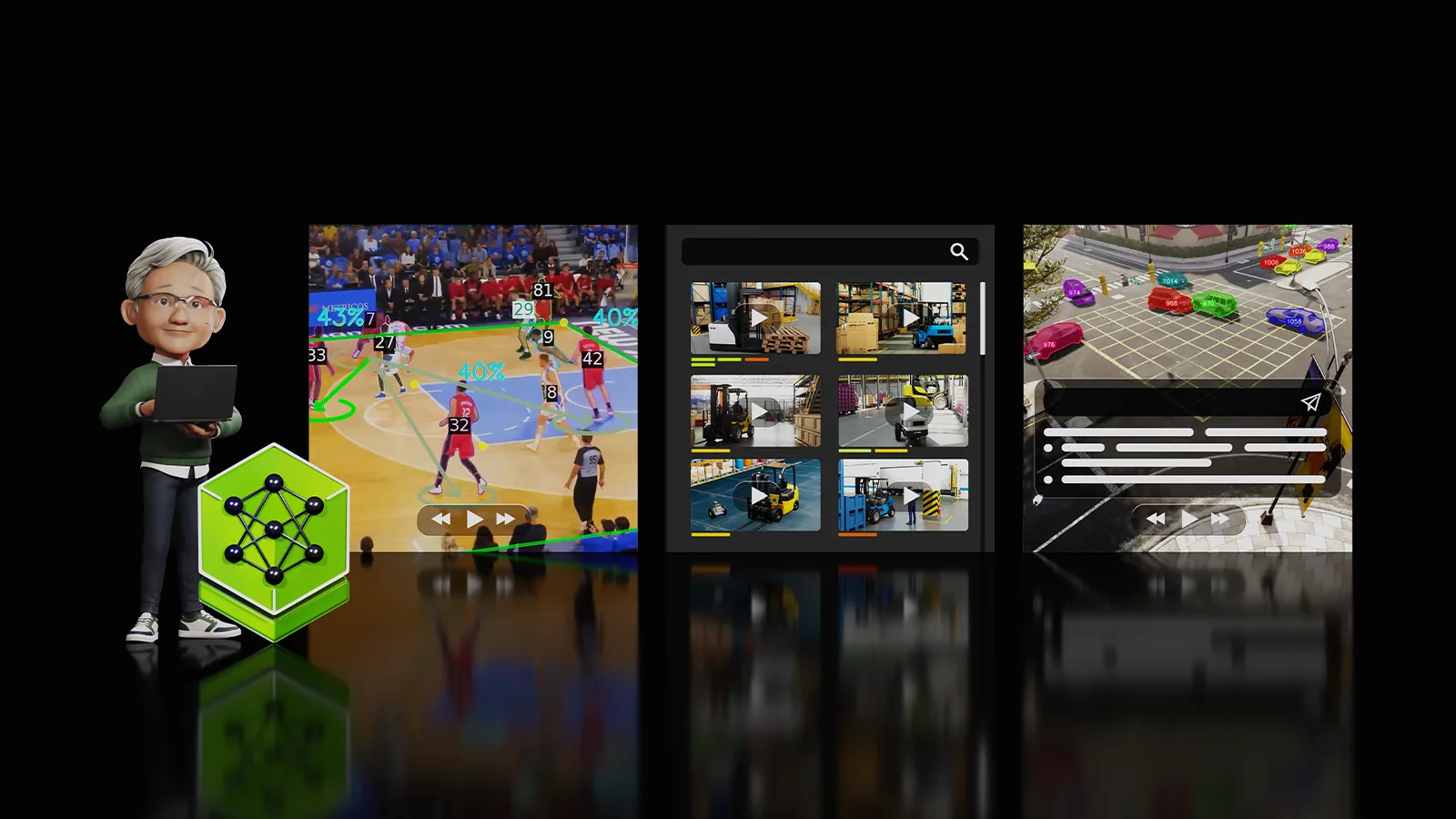
NVIDIA is rolling out an update to its Metropolis Blueprint for Video Search and Summarization (VSS) that’s aiming to fix this. They’re pitching it as a way to turn that flood of pixels into instantly searchable, actionable intelligence. Think less surveillance footage, more a readily accessible database of events, trends, and critical information.
The core of this push is the concept of AI agents. These aren’t just passive processing units; they’re designed to perceive, reason, and act on video data in real-time. NVIDIA’s VSS, in its latest iteration, leans heavily on a blend of accelerated vision microservices, vision-language models (VLMs), and large language models (LLMs). The idea is to create a system that can not only find a specific moment in hours of footage but also understand its context and summarize its significance.
Automating the Unautomatable? Developers Get a Break.
For developers, the promise here is significant. Historically, building sophisticated video analytics applications meant wrestling with a complex web of microservices. Deploying, integrating, and configuring these pieces for video management, search, and summarization was a manual, often tedious, affair. VSS 3.0, with its new modular design and “skills” for autonomous agents, aims to slash that development overhead.
Now, they’re talking about using coding agents augmented with these VSS skills to automate much of that process. Imagine chatting with an AI agent to deploy VSS, define search parameters, and integrate it into your own custom applications. It sounds like a significant leap from the command-line wrangling of yesteryear.
“Today, it’s possible to use coding agents augmented with VSS skills to automate the deployment, usage and integration of VSS all through a simple agentic chat interface.”
This shift towards agentic workflows is more than just a convenience. It lowers the barrier to entry considerably. Companies that might have found the technical hurdles too high to implement advanced video analytics can now potentially do so with a more conversational, less code-heavy approach.
How It Actually Works: The Technical Underpinnings
The VSS skills are designed to be compatible with a range of AI agents, provided they adhere to the agent skills specification. You’ll need a system capable of running VSS itself, and an agent that supports these skills—think options like Codex, Claude Code, OpenClaw, or NemoClaw.
The process, as outlined, involves setting up VSS, often through NVIDIA’s Brev Launchable, which simplifies deployment. Once that’s in place, developers can install VSS skills for their chosen coding agent. A prompt to the agent, like the one shown in the original material, instructs it to read documentation and install the available skills. This symlinks the skill folders, meaning a simple git pull in the VSS repository can keep all installed skills up-to-date—a smart touch that avoids manual refreshes.
Once the agent is “loaded” with VSS skills, it can be commanded to deploy specific VSS components, such as the VSS Search profile. The agent then handles the planning, environment variable configuration, and container deployment needed to get the search capability running.
The Bottom Line: Is This a Real Leap Forward?
NVIDIA’s VSS Blueprint is tackling a real, widespread problem. The sheer volume of unstructured video data is a massive inefficiency. By layering AI agent capabilities on top of their existing video analytics framework, they’re offering a more intuitive and automated path to unlocking that data.
This isn’t just about faster searches. It’s about transforming raw video feeds into a dynamic source of business intelligence. Think real-time operational monitoring, rapid trend detection, and significantly faster, data-informed decision-making. The market for AI-driven video analytics is poised for substantial growth, and solutions like VSS are key enablers.
The success of this integration will ultimately hinge on the user-friendliness of the agent interaction and the reliability of the VSS components themselves. But if NVIDIA can deliver on the promise of simplified deployment and strong performance, VSS could very well become the go-to solution for organizations drowning in video data.
This strategy makes sense for NVIDIA, given their deep roots in GPU acceleration for AI. Expanding their Metropolis platform with agentic capabilities is a natural evolution, moving from raw processing power to higher-level, more accessible AI solutions.
🧬 Related Insights
- Read more: Mundfish Dodges DLSS 5, Skeptical of AI Tools
- Read more: Samsung Foundry’s AI & HBM4 Surge: A 4nm Comeback?
Frequently Asked Questions
What is NVIDIA Metropolis Blueprint for Video Search and Summarization (VSS)? VSS is a reference architecture by NVIDIA that uses AI agents, vision-language models, and large language models to make large volumes of video data searchable and actionable in real-time.
How does VSS 3.0 simplify development? It introduces a modular design and “skills” that allow coding AI agents to automate the deployment, usage, and integration of VSS capabilities, often through a chat interface, reducing manual configuration for developers.
Will this VSS update replace traditional video surveillance systems? Not directly. VSS enhances existing video infrastructure by adding intelligent search and analysis capabilities. It transforms the data captured by surveillance systems (and other video sources) into usable intelligence, rather than replacing the capture hardware itself.