Forget climate change worries for a second; think about the sheer hunger of AI. This isn’t just about faster chips or fancier algorithms anymore. We’re talking about a fundamental platform shift, like the dawn of the internet or the advent of mobile, and it’s gobbling up electricity at an astonishing rate. Data centers, the silicon brains of our digital world, are straining power grids to their breaking point. And when you hit a wall on Earth, where do you look? To the stars, apparently.
Orbital Inc., a Los Angeles-based startup, has just blasted out of stealth mode with a plan so audacious it sounds like science fiction: build data centers in space. Think less clunky, centralized behemoths and more a cosmic mesh network of tiny, solar-powered AI processing units. Backed by the venture capital titans at Andreessen Horowitz (a16z), they’re aiming to put GPUs to work for AI inference – that’s the part where trained AI models actually do something, like answer your chatbot queries or generate text. Their logic? The sun beams down an almost unimaginable amount of ‘free’ energy, totally unburdened by our terrestrial power supply woes.
“There simply isn’t enough capacity here [on Earth], and the only way is up,” says Orbital’s founder and CEO, Euwyn Poon. A stark, almost grim assessment. But then, a glimmer of wonder: “There’s actually abundant solar energy that’s not being harnessed.” It’s like finding an untapped ocean of power just waiting to be tapped.
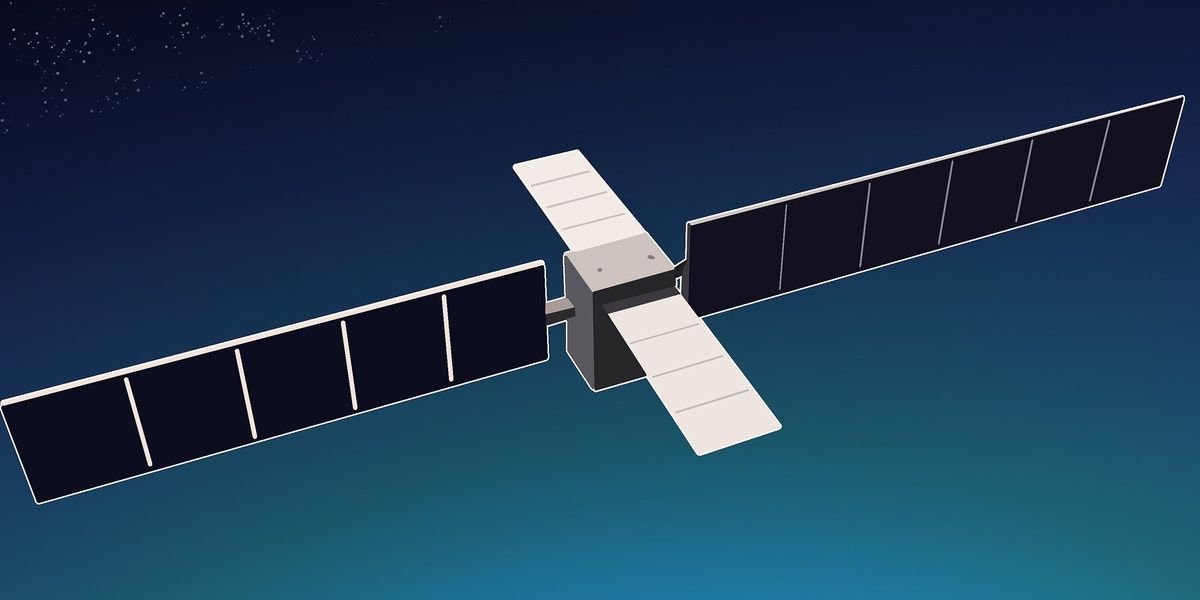
Their vision is a constellation of small satellites, each a little solar-powered AI hub. Picture this: satellites about the size of a fridge, each equipped with GPU servers, all wrapped in solar panels the size of a tennis court. Radiative cooling panels, equally massive, to deal with the inevitable heat. The ultimate goal? Up to 10,000 of these space pods, chattering with each other via laser links, creating a distributed cloud. It’s eerily similar to SpaceX’s own, albeit conceptual, AI Sat Mini. This isn’t just a pipe dream; they’re targeting 2027 for a SpaceX Falcon 9 launch to test their orbital GPU chops with real-world inference tasks.
Orbital’s differentiator isn’t just the concept of space data centers – others have dabbled. It’s their laser focus on inference workloads. Training massive AI models is a brute-force, tightly coupled affair. Inference, however, is more like a skilled artisan carefully crafting individual pieces. It can be parceled out, distributed across smaller, less power-hungry units. Capping each satellite at a cool 100 kilowatts, Poon argues, drastically simplifies the engineering. “It’s very simple,” he states, with an engineer’s pragmatic pride. “Engineers would appreciate this.”
So, how does it work? A request, say, to an AI assistant, zips from Earth to a ground station, then beams up to an unsuspecting satellite. Lasers wink between satellites, finding an available GPU. The AI crunches the numbers, spits out the answer, and it’s sent back down the cosmic chain. It’s elegant. It’s futuristic. It also relies on ground stations that only have line-of-sight when the satellites pass overhead – a quaint reminder that even in orbit, we’re still tethered to Earth.
The Cosmic Hurdles: Heat, Radiation, and the Void
Poon is upfront about the challenges. Sending your precious silicon into space is… complicated. Radiation is a constant enemy, capable of flipping bits and corrupting data. And then there’s heat. No air means no fans, just vast surfaces trying to radiate warmth into the unforgiving vacuum. Maintenance? Forget about it. If something breaks, it’s orbital junk.
“Part of the mission is to figure out the unknowns,” he says. This isn’t just about launching hardware; it’s about pioneering a new frontier of computing, where every decision has life-or-death consequences for your hardware.
Dr. Amit Verma, an electrical engineering professor with expertise in semiconductor devices, echoes these concerns. Thousands of satellites mean thousands of potential failure points, with zero easy fixes. The operational feasibility, he notes, hinges entirely on the applications. AI chatbots? They can tolerate a bit of lag. But anything requiring split-second, real-time data processing? That’s a much tougher nut to crack.
While the idea of space-based AI inference is undeniably cool, and potentially a critical solution to Earth’s energy crunch, it’s a massive bet. Orbital Inc. is essentially trying to build a distributed supercomputer out of the most challenging environment imaginable. Their success hinges on solving physics problems that have stumped engineers for decades. It’s a proof to the sheer, unyielding demand for AI, that we’re now seriously contemplating mining the sun’s power from orbit.
Can AI Truly Thrive in the Vacuum?
The specter of AI’s energy consumption is forcing innovation in some truly wild directions. Orbital’s approach, focusing on the less demanding inference tasks, makes a modicum of sense. It’s not about training the next GPT-5 in low Earth orbit – that’s still firmly a terrestrial, grid-guzzling affair. This is about distribution, about finding pockets of usable compute where none existed before. But the question remains: can these fragile, sun-powered machines truly withstand the cosmic gauntlet for long enough to make a dent?
The allure of ‘free’ energy is powerful. But the cost of getting it, conditioning it, and keeping it operational in the harshness of space – that’s a calculation that’s still very much in progress. This is more than just a startup story; it’s a narrative about humanity’s insatiable drive to compute, pushing the boundaries of engineering and physics ever outward, towards the final frontier.
🧬 Related Insights
- Read more: SK hynix Hybrid Bonding: What It Means for Your Next AI Chip
- Read more: Edinburgh Councillors Reject ‘Green’ AI Datacenter [Key Vote]
Frequently Asked Questions
What does Orbital Inc. actually do? Orbital Inc. is developing a network of small satellites equipped with AI processing power (GPUs) to run AI inference tasks in space, aiming to utilize solar energy and bypass terrestrial energy constraints.
Will this technology replace data centers on Earth? It’s unlikely to entirely replace terrestrial data centers, especially for training large AI models which require immense, tightly coupled compute power. Orbital’s focus is on inference workloads, which can be more easily distributed and might supplement existing infrastructure.
What are the biggest challenges for Orbital Inc.? The main challenges include dissipating heat in a vacuum, protecting hardware from space radiation, the difficulty and cost of maintenance and repairs in orbit, and ensuring reliable communication links.