1,000,000x.
That’s the jaw-dropping stat NVIDIA drops: inference throughput per megawatt, improved over six architecture generations. Enough to make your eyes pop. If cars got that efficient, one gallon would get you to the moon and back—multiple times.
But here’s the thing—I’ve chased Silicon Valley hype for 20 years, and numbers like this scream ‘press release.’ So, let’s peel back the layers. Is performance per watt really the kingmaker in these so-called AI factories? And who’s actually banking the revenue?
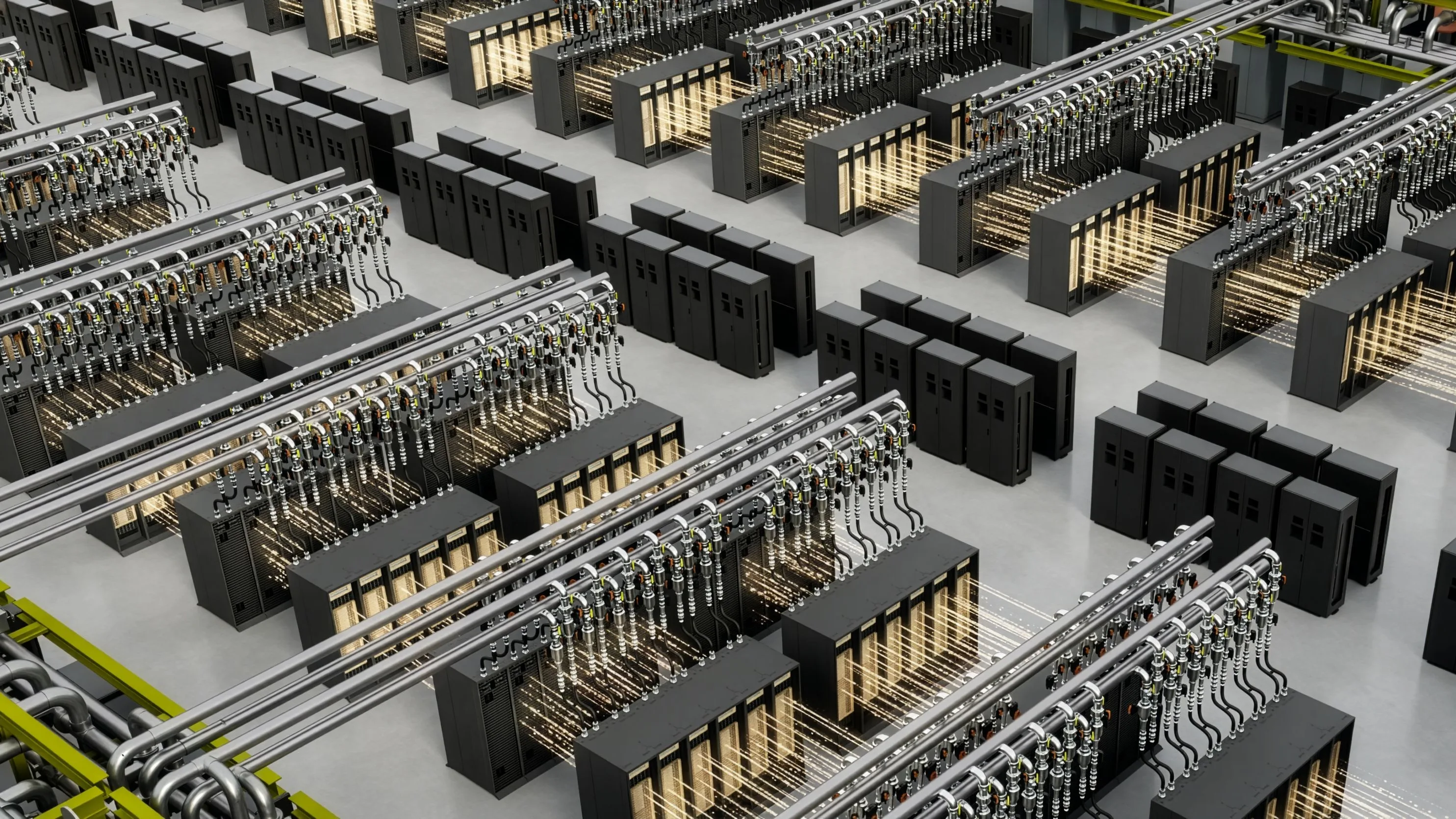
NVIDIA paints data centers as token factories, churning intelligence from watts like assembly lines spit out widgets. Power’s the choke point—land, grids, cooling shells dictate everything. Squeeze more tokens per megawatt, you print money without begging utilities for more juice.
NVIDIA’s Architecture Ladder: Hopper to Rubin
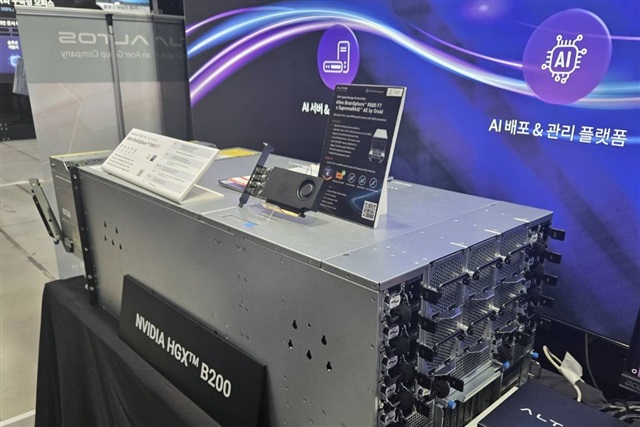
Start with Hopper. Transformer Engine, FP8 tricks, fourth-gen Tensor Cores—NVIDIA says it slashed energy waste big time over Ampere. Solid gains, sure. Then Blackwell piles on: fancier HBM, NVLink fabrics for those massive NVL72 racks, NVFP4 cores. SemiAnalysis InferenceX benchmarks? Up to 50x higher throughput per megawatt versus Hopper on DeepSeek-R1, 35x cheaper tokens.
Recent SemiAnalysis InferenceX data shows that NVIDIA software optimizations and NVIDIA Blackwell Ultra GB300 NVL72 systems deliver up to 50x higher throughput per megawatt and 35x lower token cost than Hopper for DeepSeek-R1.
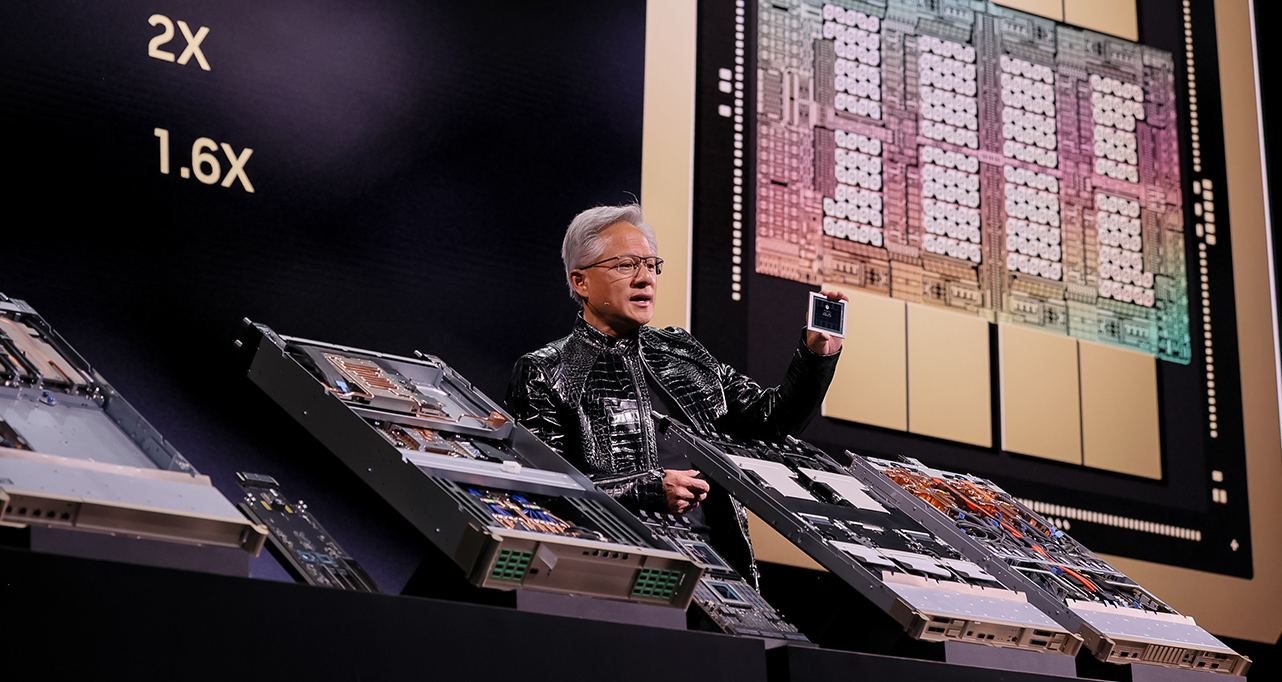
Rubin? Vera CPUs at 2x efficiency, NVLink 6, rack-scale thermals—all co-designed. Promises 10x inference per megawatt over Blackwell on Kimi K2. Pair with Groq’s LPX? 35x throughput jump for trillion-param beasts. NVIDIA tops Green500 too—nine of top ten spots.
Impressive stack. But wait—is this apples-to-apples? Benchmarks love controlled labs. Real factories? Dust, heat waves, flaky grids. Still, the trajectory’s real. NVIDIA’s eating competitors’ lunch.
Power Crunch: Why Watts Trump Flops Now
AI’s ballooning—trillion-param models, endless inference. But grids creak. California blackouts? AI farms nearby. Texas freezes? Same story. Performance per watt isn’t buzz—it’s survival.
NVIDIA gets it: co-design everything. Chips, liquid cooling, software orchestration. Compound those, watts turn to tokens. cuLitho speeds lithography 70x on GPUs—overnight masks, 1/9th power of CPU herds. cuEST? 55x on quantum chem for leakier-low materials. Pre-silicon tweaks feed transistor-level wins.
And the kicker? Manufacturing pipeline itself optimized. Fewer weeks, less power, tighter designs. It’s extreme—chip to factory, all NVIDIA-tuned.
But cynicism check: Who’s paying? Hyperscalers like Meta, Google, locked into NVIDIA ecosystems. Tokens cheaper, sure—but margins fatter for Jensen Huang.
Is This NVIDIA Lock-In Permanent?
Here’s my unique take, absent from the original love letter: This mirrors Intel’s 1980s-90s x86 moat. Efficiency snowballed, ecosystem glued devs in, rivals gasped. AMD nibbled with fabless tricks, but Intel owned until process nodes stalled and complacency hit.
NVIDIA? Similar playbook, but AI’s warp speed. 1M x over six gens—Blackwell to Rubin another 10x. Competitors like AMD MI300X or Intel Gaudi? Chasing shadows. Groq’s fast, but niche. Custom silicon from Google/Amazon? Impressive, but NVIDIA’s CUDA fortress holds.
Prediction: By 2027, Rubin dominates premium inference. Power caps hyperscaler expansions—NVIDIA’s the tollbooth. Revenue per megawatt? Skyrockets. Shareholders cheer. But grids? National security risk if AI’s power hogging blacklights cities.
Critique the spin: ‘AI factory’—cute rebrand, but it’s warehouses full of GPUs. ‘Token factories’? Tokens don’t pay bills; APIs do. And that 1M x? Cumulative, generational— not one chip’s magic.
The Money Trail: Who Wins in the Watt Wars
Follow the cash. NVIDIA’s stock? Tripled since ChatGPT. Efficiency means more racks per grid megawatt—more GPUs sold. Software like Triton? Locks in inference stacks.
Hyperscalers? Cheaper tokens boost margins—until they build ASICs. But switching costs? Astronomical. Startups? Rent NVIDIA via cloud, pray for scraps.
One short para. Cynical truth: Efficiency’s great, but power politics decide winners.
End-to-end wins compound. Hopper to Rubin: architecture, systems, software, even fab accel. But bottlenecks loom—TSMC capacity, HBM shortages, geopolitical fabs.
I’ve seen cycles: Cray supercomputers to clusters. AI factories next? Bet on NVIDIA riding this wave longest.
Why Does Performance per Watt Define AI Factories?
Simple. Fixed power envelope—10GW cap for giants. More tokens? Revenue. Less? Idle cash.
NVIDIA’s edge: Full stack. Vera CPU halves power draw. Liquid cooling shifts watts to compute. Orchestration squeezes cycles.
Real-world? Supercomputers prove it—Green500 dominance. Inference? SemiAnalysis nods yes.
But here’s the rub—latency kings like Groq nibble edges. For chatbots, throughput rules.
🧬 Related Insights
- Read more: Europe’s Desperate Hunt for a Cloud Killer
- Read more: Sony’s PS5 Price Surge: AI Memory Crunch Hits Consoles Hard
Frequently Asked Questions
What is performance per watt in AI data centers?
It’s tokens (or FLOPs) generated per megawatt consumed—key for revenue when power’s scarce.
Does NVIDIA Blackwell beat Hopper by 50x efficiency?
Benchmarks say yes on specific models like DeepSeek-R1, but real fleets vary with software tweaks.
Will Rubin GPUs make AI inference 10x cheaper?
Promised versus Blackwell— if power grids cooperate and supply chains deliver.