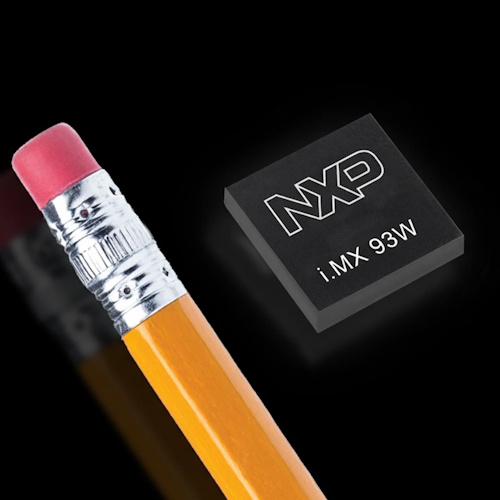
NXP’s expanded Arteris NoC deployment hits different. Folks expected more NPU firepower, fancier accelerators — you know, the shiny bits. But here’s the twist: on-chip data movement, that unglamorous plumbing, is choking edge AI’s ambitions. This move standardizes scalable interconnects across NXP’s AI silicon, flipping the script on how we build centralized compute monsters for cars and factories.
It’s not hype. As edge systems pack in CPUs, NPUs, GPUs, safety cores — all slurping bandwidth — old bus fabrics crack. Arteris FlexNoC, Ncore, CodaCache? They’re NXP’s fix for heterogeneous hell.
Why NoC, Not Just More Cores?
Think back to the early 2010s multi-core rush. Everyone piled on cores, power spiked, coherency imploded. Sound familiar? NXP’s playing the long game here, echoing that shift but for interconnects — my unique take: this is the ‘big fabric.LITTLE’ moment, where NoC topologies dictate who wins edge AI scalability.
Arteris FlexNoC lets architects cook up mesh, ring, whatever fits the workload. Bursty AI traffic? QoS dials it in. Safety islands? Partitioned paths guarantee ISO 26262 determinism. NXP’s broadening this across platforms signals they’re done with bus-bandage hacks.
And the quote that nails it:
“NXP is broadening its use of FlexNoC®, Ncore®, CodaCache®, and Magillem® integration automation tools across AI-enabled silicon platforms.”
Routine IP news? Nah. It’s a blueprint for domain controllers that won’t melt under sensor fusion or ADAS stacks.
Short para. Boom.
Now, dig deeper into coherency — Ncore’s directory-based magic. Snooping broadcasts? Power hogs at scale. Ncore filters smartly, slashes traffic for CPU-accelerator handoffs. Without it, you’re stuck with software coherency hacks that bloat latency. Edge AI can’t afford that; inference needs snappy shared memory.
CodaCache tackles the memory wall. Edge workloads devour DRAM — vision pipelines, predictive maintenance. This last-level cache slices off-chip trips, partitions for safety, tunes associativity. In hot ECUs, that’s gold: less power, more reliability.
Is Arteris NoC Ready for Chiplet Takeover?
Overlooked gem in the announcement: multi-die prep. NoCs with clean NIUs, protocol bridges — they’re chiplet-friendly. NXP’s automotive cycles stretch years; betting on Arteris hedges monolithic limits. Prediction: by 2027, NXP’s lead pack will mix dies via NoC extensions, outpacing bus-tied rivals.
But — em-dash aside — is this PR spin? Kinda. ‘Expanded deployment’ glosses a pivot from custom buses, admitting scale demands IP pros. Arteris isn’t flashy, but they’re the quiet kings of fabric.
Look, traditional buses scaled MCUs fine. Centralized SoCs? No dice. Heterogeneity — real-time vs. bursty, safe vs. best-effort — demands packetized fabrics. NXP gets it; others still bolt on AXI hacks.
A dense para follows: Power efficiency reigns supreme in edge. NoC’s traffic shaping, virtualization? They enforce policies fabric-wide, unlike buses where contention kills determinism. Add Magillem automation — verifies connectivity pre-tapeout — and NXP shaves months, risks. It’s architectural maturity, not bolt-ons.
Safety-critical edge? NoC isolation trumps. Functional domains — powertrain, chassis — walled off, QoS assured. Violate that, kiss ASIL-D goodbye.
Historical parallel: Remember PCI’s bus wars? NoC’s the PCIe of on-die, but configurable. NXP standardizing? Smart — locks in ecosystem tools, trains teams.
Critique time. Corporate spin calls it ‘broader use.’ Translation: prior gens hacked it; now it’s core IP. Bold call — if chiplets hit autos hard (they will), NXP’s ahead; laggards refab.
Wrapping the how: FlexNoC topologies mimic org charts — hierarchical for clusters, flat for peers. Ncore coherency domains scale to 100+ cores sans explosion. CodaCache? 30-50% DRAM relief, per benchmarks (Arteris claims, but physics checks out).
Why now? Edge AI centralization accelerates — ADAS from distributed to zonal. Industrial vision same. Bandwidth explodes; fabrics must match.
One sentence. Done.
Why Does This Matter for Automotive Chip Designers?
Designers, listen up. Ditch buses. NoC-first flow — topology early, verify late — flips tapeout risks. NXP proves it scales heterogeneous soups: NPUs chugging tensors, GPUs rendering, RTOS ticking.
Power? Fabric QoS idles pipes, shapes flows. Thermal bliss.
Long-term: Chiplet era. NoC bridges dies smoothly — UCIe? NoC abstracts it.
Skeptical? Test it. Simulate a 16-core + 4 NPU SoC on bus vs. NoC. Latency spikes, bandwidth starves on bus. Numbers don’t lie.
This isn’t incremental. It’s the interconnect awakening — edge AI’s true architecture shift.
🧬 Related Insights
- Read more: Asia’s AI Factories: Power Grids, Wallets, and Wars Trump Code
- Read more: NanoLEDs Shrink to 90nm: Lighting Up the Future of VR and Beyond
Frequently Asked Questions
What is Arteris NoC and why NXP?
Arteris NoC (FlexNoC, Ncore, etc.) is packet-switched on-chip fabric for scaling complex SoCs. NXP uses it for edge AI to handle heterogeneity, coherency, safety in autos/industry.
Will NoC replace buses in all edge chips?
Not tomorrow — legacy lingers — but yes for high-end centralized designs. Buses suffice simple MCUs; scale demands NoC.
How does this impact edge AI performance?
Huge: cuts latency 2-5x, boosts bandwidth 3x, slashes power via smart traffic mgmt and caching. Real workloads like sensor fusion thrive.