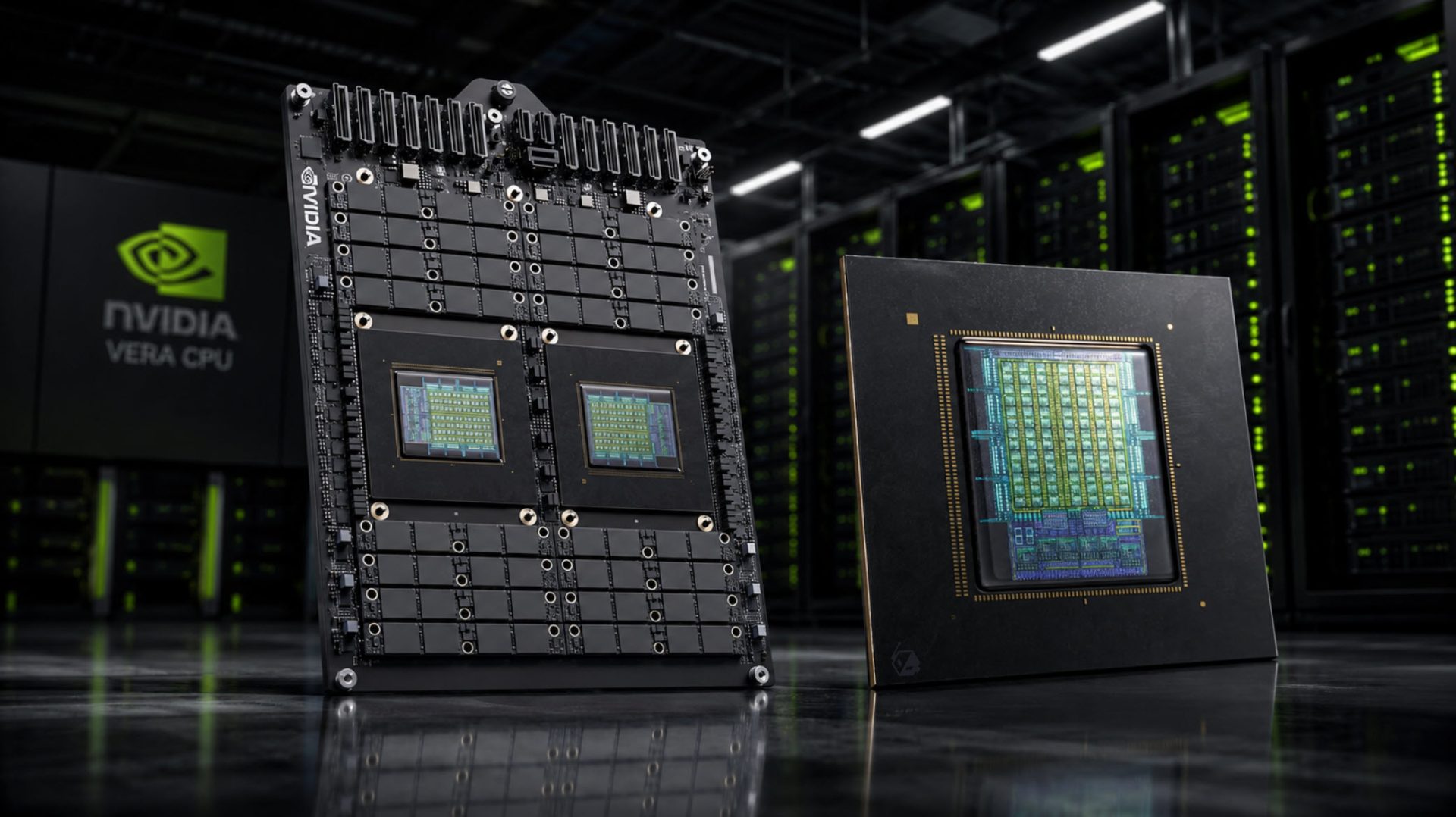
The chatter around AI lately has been a cacophony of GPU power, massive model sizes, and the ever-escalating arms race in silicon. But what about the unsung hero of the AI factory floor? The CPU. You know, the part that orchestrates, compiles, compresses, and generally keeps the digital lights on while the GPUs do their flashy work. NVIDIA’s new Vera CPU, with its custom Olympus cores, is stepping out of the shadows, and the initial benchmarks suggest it’s not just showing up; it’s gunning for the main stage.
This isn’t just another speed bump in the relentless march of silicon. The Vera CPU is tailored for what NVIDIA is calling ‘agentic AI’ – think AI that can act, plan, and execute complex tasks autonomously. This new breed of workload demands something different from CPUs: not just raw clock speed, but sustained performance across all cores, massive memory bandwidth, and an almost absurd efficiency in how it moves data. It’s a shift that’s been brewing, and Vera appears to be the first real answer to that specific, evolving need.
The ‘Agentic AI’ Sweet Spot
What does ‘agentic AI’ actually mean for your everyday tech experience? It’s the stuff of science fiction becoming reality, but with a distinctly practical bent. Imagine AI agents managing your cloud infrastructure, optimizing complex supply chains in real-time, or even conducting complex scientific simulations. These aren’t simple, single-thread operations. They involve juggling numerous sandboxed environments, orchestrating tool calls, processing vast datasets, and making decisions with incredibly low latency. This is where Vera’s architecture, built around 88 custom Olympus cores and a staggering 1.2 TB/s of memory bandwidth, aims to shine. It’s designed to prevent those frustrating stalls and unpredictable slowdowns that plague less specialized hardware.
Michael Larabel, the tireless force behind Phoronix, put it plainly after his initial tests.
“Going into this, I didn’t really know what to expect of NVIDIA’s Vera with the new Olympus cores. But in the end I was left realizing this is the most formidable competition to Intel and AMD x86_64 processors ever realized.”
That’s not faint praise. It’s a declaration that a new contender has arrived, and it’s not playing coy. The implication here is profound: the traditional CPU dominance enjoyed by Intel and AMD, particularly in the server and data center space, might finally face its most serious challenge yet, not from another x86 architecture, but from within the Arm ecosystem championed by NVIDIA.
Memory Bandwidth: The Silent Bottleneck Buster
If you’ve followed chip architectures for any length of time, you know that raw core count and clock speed are only part of the story. The real bottleneck, especially in data-intensive workloads like AI, is often memory bandwidth. Moving data to and from the processing cores is the digital equivalent of a highway system; if the roads are too narrow or congested, even the fastest cars will crawl. Vera’s approach here is particularly striking. It use second-generation LPDDR5X memory, a technology usually associated with power-efficient mobile devices, and pushes it to an extreme:
Up to a colossal 1.2 TB/s of bandwidth. To put that into perspective, that’s roughly double the peak bandwidth of many traditional server CPUs, and it’s achieved with a fraction of the power consumption for the memory subsystem itself – less than 30 watts compared to over 100 watts for typical DDR5 setups. This isn’t just about speed; it’s about doing that speed efficiently. For data centers facing escalating power bills and cooling challenges, this memory-per-watt advantage is a massive selling point.
The Phoronix STREAM TRIAD tests, a standard benchmark for memory bandwidth, showed Vera sustaining an astonishing 90% of its peak bandwidth. This is a level of sustained performance that few, if any, CPUs can match. Moreover, it delivered over four times the memory bandwidth per core compared to traditional x86 CPUs. When you’re running dozens, even hundreds, of AI agents simultaneously, each needing quick access to its data, that kind of per-core efficiency becomes paramount. It’s the difference between a smoothly flowing river and a series of choked rapids.
A Generational Leap, Not Just a Step
NVIDIA isn’t new to the CPU game, of course. The Grace CPU was their initial foray into this market. But the leap from Grace to Vera isn’t just evolutionary; it’s a generational explosion. Larabel reports a 1.6x geometric mean increase in performance from Grace to Vera. That’s the kind of jump that forces engineers to rethink roadmaps and marketing departments to scramble for superlatives. And when you stack Vera against the current cream of the x86 crop – a latest-generation 128-core processor – Vera pulls ahead with a 1.5x overall performance advantage.
This isn’t just academic. In practical developer workloads, like compiling the Linux kernel, a single-socket Vera chip did it in a lightning-fast 20 seconds. That’s not just fast; it’s faster on a per-core basis than the 128-core competitor. In another comparison, Vera delivered 10% better performance than the high-frequency AMD EPYC 9575F processor on a geometric mean basis. These aren’t minor skirmishes; these are decisive victories in core computing tasks that form the bedrock of software development and AI deployment.
The Bigger Picture: Architectural Shifts and What It Means for You
What’s really fascinating here is the underlying architectural philosophy. NVIDIA is clearly betting big on a holistic approach. They design the GPU, they design the CPU (Olympus cores), they design the interconnect fabric, and they design the memory subsystem. This vertical integration allows them to optimize every piece for the specific demands of modern AI workloads, rather than trying to make off-the-shelf components play nicely together. The result is a system where the CPU isn’t just a server; it’s an integral, high-performance component of the AI processing pipeline.
This move also signals a potential splintering of the high-performance computing market. For decades, x86 has been the default, the unquestioned king of servers. But as workloads like agentic AI become more specialized, so too will the hardware designed to tackle them. We’re seeing a rise of custom silicon, Arm’s resurgence in the data center, and now, NVIDIA’s aggressive push with Vera, demonstrating that tailored architectures can, indeed, outperform general-purpose behemoths in their target domains.
For the average user, this might seem distant. But better, more efficient AI infrastructure means more capable AI applications, faster innovation, and potentially, more accessible AI services down the line. Think more sophisticated chatbots, more accurate predictive models, and more powerful tools that can automate complex tasks. It’s a slow burn, but the foundations being laid today will define the AI-powered world of tomorrow.
🧬 Related Insights
- Read more: BrainChip’s Radar Platform: Teaching Radars to Spot Drones from Ducks
- Read more: NVIDIA’s 1,000,000x Efficiency Sprint: Real Moonshot or Just Better Chips?
Frequently Asked Questions
What does NVIDIA Vera CPU actually do?
NVIDIA Vera is a CPU designed for agentic AI workloads, focusing on high core utilization, massive memory bandwidth, and power efficiency to orchestrate and execute complex AI tasks.
Will this replace my current server CPU?
For specific agentic AI workloads, Vera offers a significant performance and efficiency advantage, potentially making it a compelling alternative or upgrade for data centers focused on AI, though broad replacement will depend on ecosystem adoption and cost.
Is NVIDIA Vera open-source?
NVIDIA Vera itself is a proprietary hardware product. While it is based on the Arm instruction set architecture, which has open aspects, the specific Olympus cores and system architecture are NVIDIA’s custom designs.