Look, for most of us, shelling out for the latest GPU to run a moderately sized AI model is already a financial Everest. Now, imagine wanting to chew on a 1-trillion-parameter behemoth. The thought alone probably makes your wallet weep. But here’s the kicker: someone actually did it. Not in some super-computer farm, but on a PC with a single, mid-tier GPU and… used Optane DIMMs. Yes, the stuff Intel officially kicked to the curb.
The Grand Illusion of Cheap AI
This isn’t about some minor optimization. This is about someone wringing a truly staggering amount of AI power out of hardware that, on paper, shouldn’t even break a sweat. We’re talking about a 1-trillion-parameter model, specifically Kimi K2.5, chugging along at a respectable (for this scale) four tokens per second. All this, powered by 768GB of Intel Optane Persistent Memory. Think about that: a single RTX 3060 12GB GPU is doing the heavy lifting, while 768GB of what’s essentially dead tech acts as its massive, albeit slightly sluggish, brain. It’s like teaching an elephant to tap-dance using only a kazoo and a used trampoline. Utterly absurd, yet it works.
The genius, or perhaps sheer desperation, behind this build is a Redditor known as APFrisco. They snagged six 128GB Intel Optane PMem modules for a song. Intel designed Optane to sit in that awkward space between lightning-fast DRAM and slower, but capacious, SSDs. For LLMs, which gorge on vast amounts of data, this middle ground turns out to be surprisingly fertile soil. While Optane is still slower than true RAM, it’s orders of magnitude faster than an SSD, and crucially, significantly cheaper when bought second-hand. The equivalent DRAM capacity would cost a fortune. Intel’s decision to abandon Optane now looks even more short-sighted, especially when you see this kind of innovation blooming from its ashes.
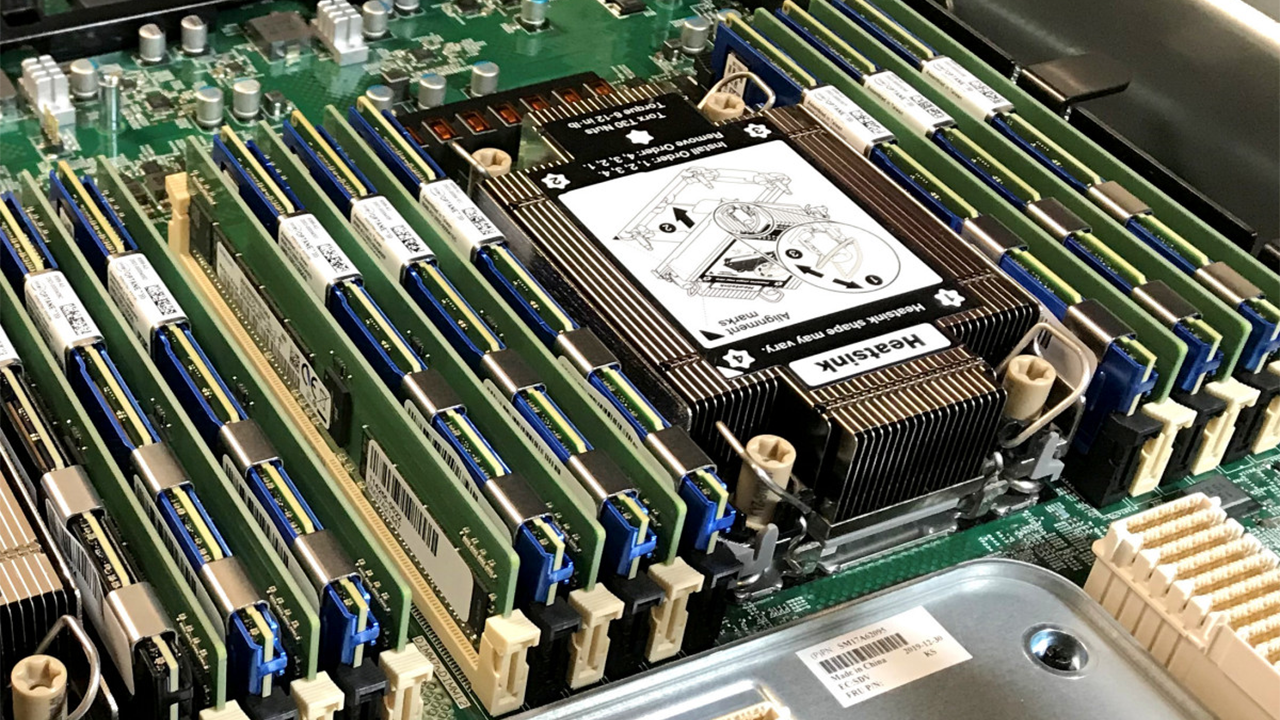
APFrisco’s hardware is a Frankensteinian marvel: a Xeon Gold CPU, a Tyan motherboard, that lone Asus RTX 3060, and the star players – 6x 128GB Optane DIMMs alongside a more modest 6x 32GB of DDR4 DRAM, which apparently acted as a cache. The Optane modules were configured in memory mode, meaning they were treated as main system RAM. This setup is a proof to the fact that sometimes, the most interesting advancements come from pushing existing, even obsolete, technology to its absolute limits. It’s a middle finger to planned obsolescence, delivered with four tokens per second.
“Given the fact that this is a trillion-parameter frontier-class model running on such a limited hardware budget, I would consider it to be a great success.”
And why shouldn’t they be proud? They’ve achieved something remarkable. The Kimi K2.5 model’s mixture-of-experts architecture, a design that cleverly partitions the AI’s capabilities, was shoehorned into the 12GB GPU using llama.cpp’s ‘override-tensor’ flag. This hybrid approach, blending GPU and CPU power, is what made the whole operation feasible. It’s a reminder that software smarts can often compensate for hardware limitations, at least to a degree.
Is This the Future of AI Hardware? Probably Not. But It Should Be.
This build is, of course, an exotic solution. Optane is dead. You can’t just walk into a store and buy more. But the principle it demonstrates? That’s golden. It screams for a memory solution that bridges the gap between DRAM and SSDs more effectively and affordably. The industry is already looking at standards like CXL (Compute Express Link) to provide just that: massive pools of byte-addressable memory for demanding workloads like LLMs. If CXL can deliver on its promise with the same cost-effectiveness that APFrisco found in dusty Optane modules, we might see a real democratization of high-end AI locally.
Intel certainly missed a trick. While they were busy chasing other markets, this niche application—running massive LLMs on a shoestring—was left ripe for the picking. It’s a stark reminder that innovation isn’t always about building something entirely new; sometimes it’s about seeing the potential in what others have discarded. So, next time you’re looking at upgrading your rig, maybe keep an eye on the used market for those forgotten components. You might just be able to build your own AI super-computer for the price of a decent gaming laptop.
🧬 Related Insights
- Read more: xAI’s GPU Wasteland: 550K NVIDIA Chips Idle
- Read more: Cerebras’ $40B IPO: The AI Chip Gamble Nobody Saw Coming?
Frequently Asked Questions
What does this mean for people who want to run large AI models locally?
It means that with clever hardware sourcing and software optimization, running very large AI models locally might become more accessible and affordable than previously thought. It shows that you don’t necessarily need the absolute latest, most expensive hardware.