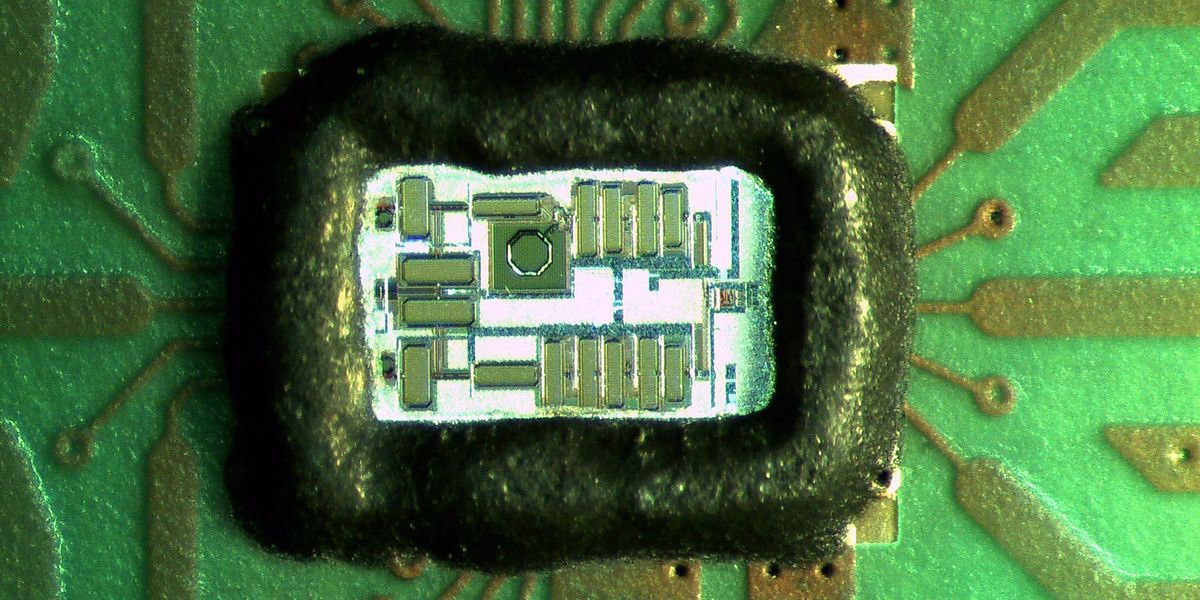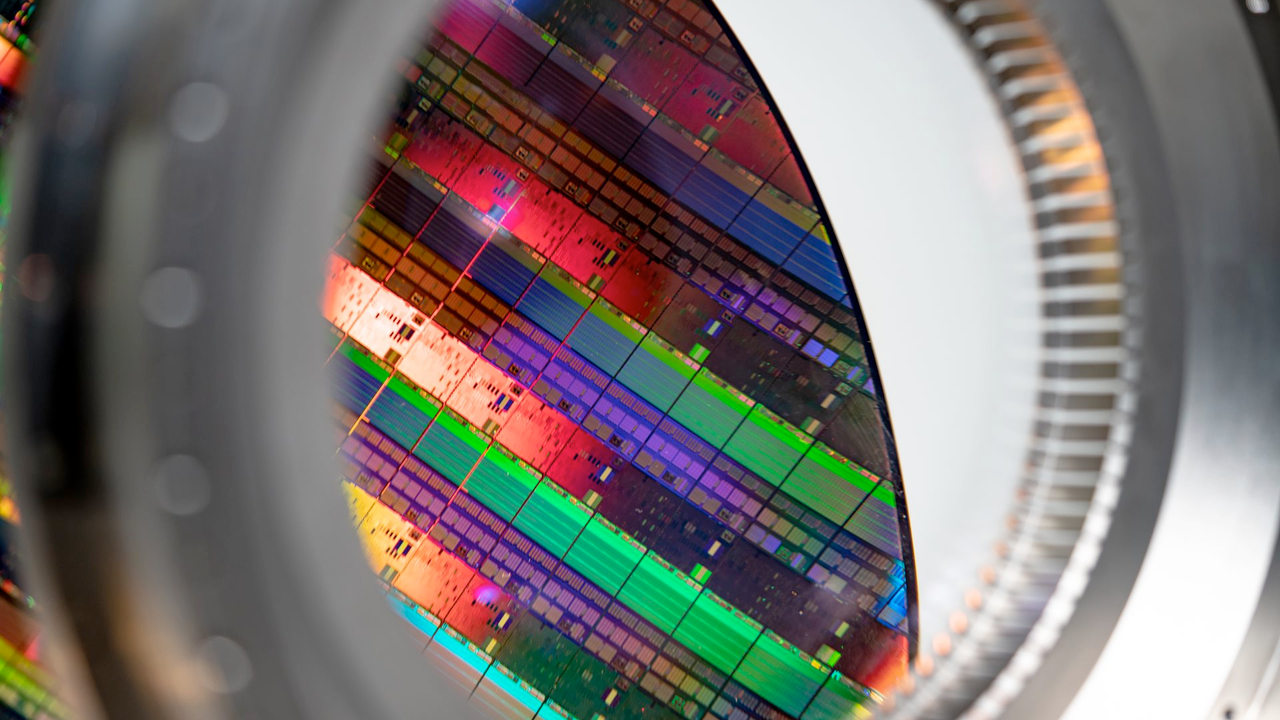
Terahertz radiation slicing through a humming CPU, lighting up transistors one by one as they switch states. No disassembly required. Just waves — invisible, high-frequency bursts — revealing the frantic dance inside silicon guts while the chip crunches code.
That’s the scene from a fresh batch of research dropping jaws in chip labs. We’re talking individual transistors, those nanoscale switches that make modern processors tick, spied on in action. Not postmortem X-rays. Live. Running.
How Does Terahertz Radiation See Inside a CPU?
Here’s the kicker: terahertz waves — squeezed between microwaves and infrared on the spectrum — slip through silicon like it’s tissue paper. Regular light bounces off; X-rays fry the works. But THz? It penetrates, scatters off free electrons in the transistors, and bounces back with a signature glow.
Researchers at places like EPFL and ETH Zurich (yeah, the Swiss precision squad) fired these waves at a test chip — a simple CMOS processor chugging away. Detectors caught the echoes. Boom: maps of transistor activity, down to the gates flipping on and off. “We can resolve individual transistors while the chip is operating,” they report, with spatial resolution pushing microns.
But wait — why now? Chips have shrunk to 2nm nodes. Transistors so tiny, optical inspection fails. Electron microscopes demand vacuum tombs. THz sidesteps that. It’s non-destructive, works at room temp, and peers into the black box of computation.
A single, mad thought: this echoes the 1940s radar revolution, when microwaves pierced fog to map submarines. THz is radar’s hyper-evolved cousin, now mapping electron seas in semiconductors. History doesn’t repeat, but it rhymes — and chips just got their sonar ping.
“This technique allows us to visualize the dynamic behavior of transistors in a functioning integrated circuit, opening new avenues for debugging and security analysis.” — Lead researcher, via the paper abstract.
Can Terahertz Attacks Steal Data From Chips?
Hold onto your API keys. Because if good guys can scan transistors remotely, so can the bad ones. Picture a side-channel attack on steroids: no power traces, no EM leaks, no cache timing. Just THz beams probing from afar, reconstructing encryption keys from transistor flicker patterns.
Is it practical? Not yet — THz sources are lab beasts, bulky and power-hungry. But scale it down (and DARPA-types are trying), and you’ve got a van parked outside a data center, zapping servers for crypto secrets. Or worse: air-gapped machines in nuclear bunkers, betrayed by their own electron chatter.
Corporate spin screams “debugging miracle!” Intel and TSMC will love non-invasive failure analysis — no more decapitating dies to find that rogue short. But let’s call the hype: this isn’t just a tool; it’s a skeleton key to chip secrecy. Remember Spectre and Meltdown? Those were architectural leaks. THz is physical espionage, no software patch required.
Why Does Terahertz Chip Imaging Matter for Security?
Architectural shift alert. CPUs aren’t black boxes anymore. For decades, we’ve trusted silicon opacity — what happens inside stays inside. THz torches that assumption. Suddenly, transistor-level transparency forces redesigns: shielded gates? Electron-scrambling noise? Or quantum-dot red herrings?
And the why: because Moore’s Law’s corpse demands it. At 1nm, quantum effects rule. Engineers need eyes inside running chips to tame tunneling, variability. THz delivers. But security lags — always does. By the time defenses harden, attackers adapt.
Look, prediction time: within five years, THz scanners hit production lines. Ten years? Portable snoopers for black-hat hackers. Chipmakers, wake up — your transistors are naked.
This isn’t hype; it’s the new physics of spying. Chips evolved for speed, not stealth. Now, with THz, every compute cycle broadcasts its innards. Debug boon? Sure. But the real story’s the vulnerability chasm widening under our feet.
One short punch: redesign or die trying.
The Road From Lab to Threat — And Back
Labs first: EPFL’s rig used a quantum cascade laser for THz pulses, synced to the chip clock. Echoes time-resolved to 10 picoseconds — fast enough for GHz transistors. Spatial res? 10 microns, eyeing sub-micron with tweaks.
Scale challenges: generate coherent THz cheaply (graphene plasmonics, maybe?). Detect faintly (bolometers improving). Distance? Lab inches; real-world meters need amplifiers.
Bold call — my unique spin: this mirrors Cold War TEMPEST, where EM leaks betrayed typewriters. Governments classified it; hackers weaponized it. THz? Same arc, but for the AI era. As data centers hum with trillion-parameter models, their transistor symphonies could leak proprietary weights.
Forget PR gloss on “analysis tools.” This is dual-use dynamite — build and defend, simultaneously.
🧬 Related Insights
- Read more: Intel’s $14.2B Fab 34 Buyback: Reclaiming Foundry Fate from Apollo
- Read more: RTX Streams Supercharge Apple Vision Pro for Pro XR Workflows
Frequently Asked Questions
What is terahertz radiation used for in CPUs?
It images individual transistors in real-time action, helping debug chips without damage — but poses data theft risks.
Can terahertz attacks hack my computer?
Not today; gear’s too bulky. But in 5-10 years, portable versions could remotely extract encryption keys from running processors.
How does terahertz see through silicon?
THz waves penetrate silicon, scatter off moving electrons in transistors, and return signals mapping their on/off states.