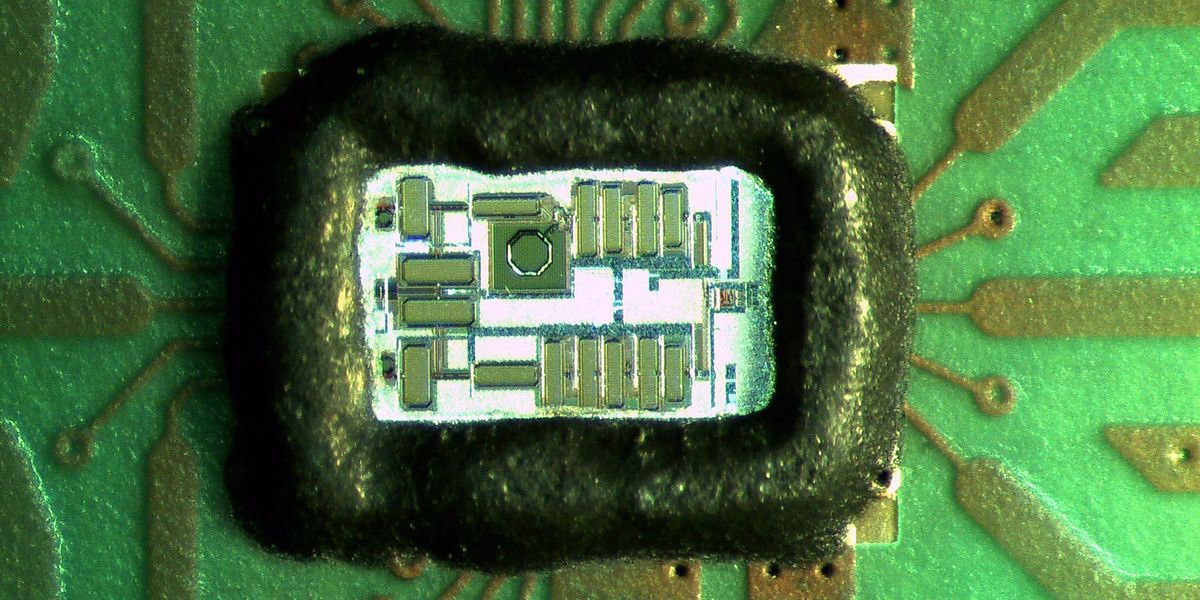
The human brain processes information with roughly 20 watts of power, yet it outperforms the most powerful supercomputers at tasks like visual recognition, language understanding, and adaptive learning. This extraordinary efficiency has inspired a new class of processors called neuromorphic chips, which mimic the brain's neural architecture rather than following the traditional von Neumann computing model. While still in early stages, neuromorphic computing could fundamentally change how we approach artificial intelligence and edge computing.
The Problem with Traditional Computing for AI
Conventional processors, whether CPUs or GPUs, follow the von Neumann architecture established in the 1940s. In this model, processing and memory are separate, connected by a data bus. Every computation requires shuttling data back and forth between the processor and memory, creating what engineers call the "von Neumann bottleneck." This architecture works brilliantly for sequential calculations but becomes increasingly inefficient for the parallel, data-intensive workloads that characterize modern AI.
Training a large language model like GPT-4 reportedly consumed tens of millions of dollars in electricity alone. Running AI inference at scale in data centers requires thousands of GPUs, each consuming hundreds of watts. As AI workloads grow exponentially, the energy cost of traditional computing architectures is becoming unsustainable. The industry needs fundamentally different approaches, and the brain offers a compelling blueprint.
How Neuromorphic Chips Work
Neuromorphic processors replace the traditional separation of processing and memory with artificial neurons and synapses that both compute and store information locally. Rather than executing instructions sequentially, neuromorphic chips process information through networks of interconnected neurons that fire in response to stimuli, much like biological neural networks.
The key principles that distinguish neuromorphic computing include event-driven processing, co-located memory and computation, massive parallelism, and analog or mixed-signal operation. In event-driven processing, neurons only activate when they receive sufficient input, meaning idle neurons consume essentially zero power. This contrasts sharply with GPUs, where transistors switch continuously regardless of whether useful computation is occurring.
Spiking neural networks (SNNs) are the computational model most neuromorphic chips implement. Unlike the artificial neural networks used in deep learning, which process continuous values, SNNs communicate through discrete spikes, binary pulses that carry timing information. The precise timing of these spikes encodes information, similar to how biological neurons communicate. This temporal coding can be more efficient than the matrix multiplications that dominate conventional AI processing.
Key Architecture Differences
- Processing model: Event-driven spikes vs. clock-driven operations
- Memory: Distributed across synapses vs. centralized in separate memory chips
- Power consumption: Proportional to activity vs. constant regardless of workload
- Communication: Asynchronous spike routing vs. synchronized data bus transfers
- Learning: Local synaptic plasticity rules vs. global backpropagation algorithms
Intel's Loihi: A Research Pioneer
Intel's Loihi processor family represents one of the most advanced neuromorphic computing platforms. The original Loihi chip, released in 2017, contained 128 neuromorphic cores supporting up to 130,000 artificial neurons and 130 million synapses. Loihi 2, released in 2021, roughly doubled these numbers while adding programmable neuron models and improved learning capabilities.
Intel has organized Loihi chips into larger systems, with the Pohoiki Springs platform connecting 768 Loihi chips to create a system with approximately 100 million neurons. The Hala Point system, announced in 2024, scales to over 1.15 billion neurons using 1,152 Loihi 2 processors. Intel reports that Hala Point can solve optimization problems up to 100 times faster than conventional CPUs while consuming dramatically less power.
Loihi has demonstrated particular strength in sparse pattern recognition, anomaly detection, and optimization problems. Intel researchers have shown it solving constraint satisfaction problems, performing robotic control, and processing sensory data from neuromorphic sensors with energy efficiency that conventional processors cannot match.
IBM's NorthPole and TrueNorth
IBM's contributions to neuromorphic computing span more than a decade. The TrueNorth chip, released in 2014, contained 5.4 billion transistors organized into 4,096 neurosynaptic cores supporting one million programmable neurons and 256 million synapses. Running on just 70 milliwatts, TrueNorth demonstrated that neural network inference could be performed at a fraction of the power consumed by conventional processors.
IBM's NorthPole chip, announced in 2023, represents a significant evolution. Rather than implementing spiking neural networks, NorthPole optimizes for conventional deep learning inference using neural-network-inspired architecture. It distributes memory across 256 computing cores, eliminating the von Neumann bottleneck while maintaining compatibility with standard AI frameworks. IBM reports that NorthPole achieves 25 times better energy efficiency than GPUs for image classification tasks.
Other Players and Approaches
BrainChip's Akida processor targets edge AI applications, bringing neuromorphic processing to devices like security cameras, industrial sensors, and autonomous vehicles. Akida is notable as one of the first commercially available neuromorphic processors, with customers deploying it in production systems rather than research labs.
SynSense, a spinoff from the University of Zurich, focuses on ultra-low-power neuromorphic processors for always-on sensing applications. Its Xylo processor consumes microwatts of power while performing audio and gesture recognition, making it suitable for wearable devices and IoT sensors where battery life is paramount.
Academic research continues to push boundaries. Stanford's Neurogrid, Manchester's SpiNNaker, and various university projects explore alternative neuron models, learning rules, and architectures. The diversity of approaches reflects the field's relative immaturity and the vast design space available when moving beyond conventional computing paradigms.
Applications and Limitations
Neuromorphic computing excels in specific application domains. Sensory processing, particularly when paired with neuromorphic sensors like event cameras that output spike-based data, is a natural fit. Anomaly detection, where the system must identify deviations from normal patterns, benefits from the temporal dynamics of spiking networks. Optimization problems, robotics control, and adaptive learning also show promise.
However, significant limitations remain. The software ecosystem for neuromorphic chips is immature compared to the deep learning frameworks available for GPUs. Training spiking neural networks is more complex than training conventional neural networks, and few engineers have experience with neuromorphic programming models. Converting existing AI models to run on neuromorphic hardware often sacrifices accuracy.
The most significant challenge may be proving that neuromorphic chips can match conventional hardware on the AI workloads that matter most commercially. While neuromorphic processors demonstrate impressive efficiency on specific benchmarks, GPUs and custom AI accelerators continue to improve rapidly, raising the bar for any alternative architecture.
Neuromorphic computing remains a technology with enormous long-term potential but uncertain near-term commercial impact. If the energy costs of AI continue to escalate, and if the software ecosystem matures sufficiently, brain-inspired processors could become essential components of future computing systems. The brain, after all, solved the efficiency problem billions of years before engineers began trying.