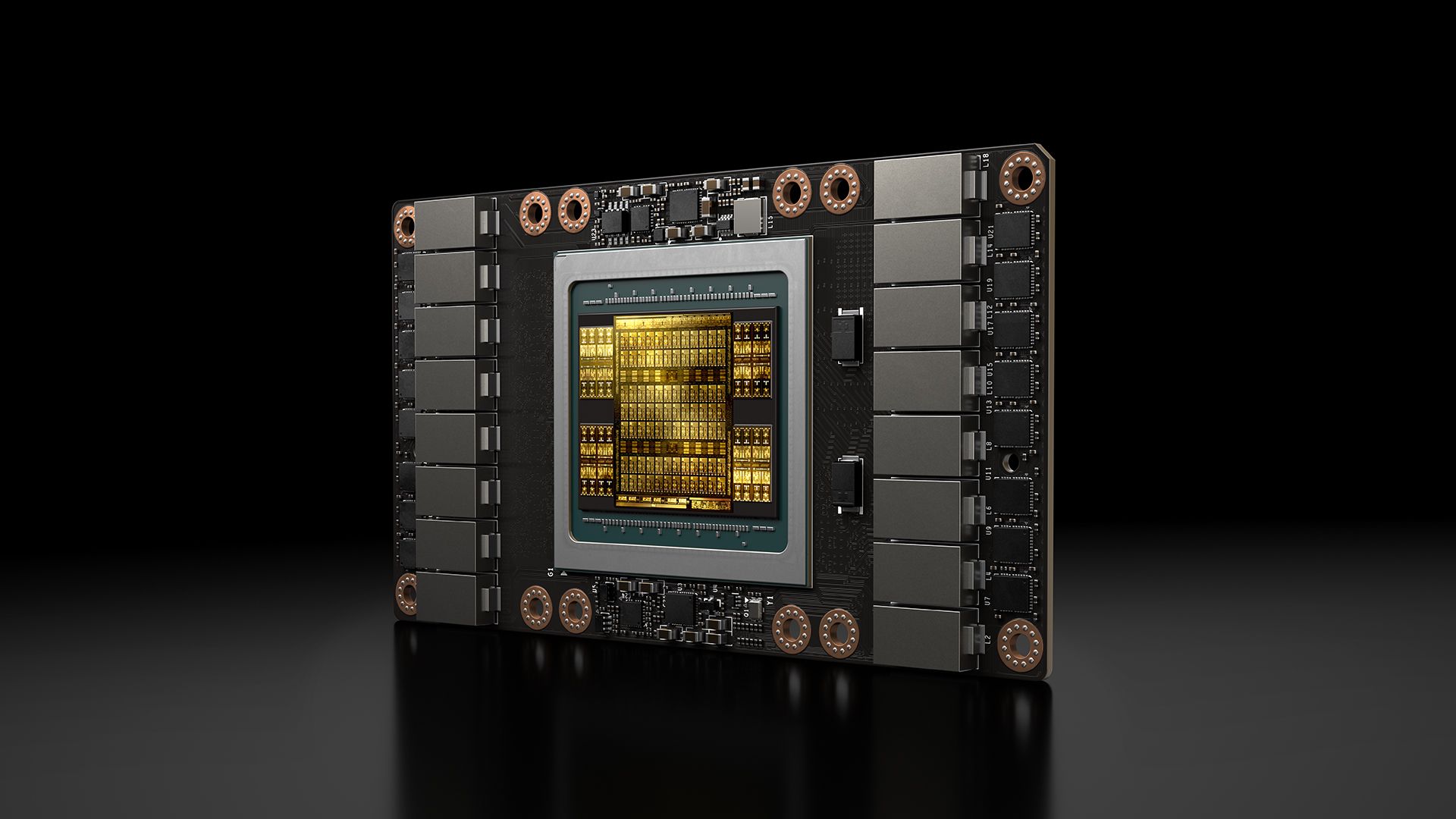
Are we witnessing the birth of the budget AI accelerator, or just Intel’s pragmatic hustle in a supply-constrained market? The leaked images of Intel’s Crescent Island data center GPU, slated for sampling in late 2026, present a fascinating strategic pivot that sidesteps the industry’s current obsession with High Bandwidth Memory (HBM). Instead, Intel is reportedly leaning heavily on LPDDR5X, a memory type more commonly found in laptops and smartphones, for its upcoming Xe3P architecture.
This isn’t just a minor spec tweak; it’s a full-throated embrace of a memory solution that directly contrasts with the HBM dominance in high-performance AI accelerators. The leaks, courtesy of X user @yuuki_ans, paint a picture of a single-GPU card, with its PCB dominated by the massive Xe3P die. Surrounding it are pads for a total of 20 LPDDR5X modules, hinting at a substantial — but ultimately bandwidth-limited — memory capacity.
The HBM Headwind
Let’s be clear: the global shortage of HBM is no laughing matter. It’s the choke point for Nvidia’s dominance, the bottleneck for AMD’s ambitions, and a genuine headache for anyone trying to scale AI hardware production. Securing sufficient HBM capacity is paramount, and it’s precisely this crisis that Intel seems determined to navigate around. By opting for LPDDR5X, Intel is effectively saying, “We’ll take the road less traveled, the one that doesn’t require navigating the HBM minefield.”
This strategy, however, comes with a significant caveat. LPDDR5X, while cheaper and more readily available, simply cannot match the sheer bandwidth of HBM. The numbers speak for themselves: current estimates suggest Crescent Island will hover well under 1TB/s of memory bandwidth. For context, Nvidia’s older H200 GPUs boast nearly 5TB/s. Memory bandwidth isn’t just a number; it’s the lifeblood of AI workloads, dictating how quickly these massive neural networks can be fed data and, consequently, how fast they can churn out results.
Is Cheaper Always Better?
The million-dollar question then becomes: can LPDDR5X provide enough oomph for meaningful AI acceleration, or is Intel sacrificing performance on the altar of cost and availability? The company is pitching Crescent Island for air-cooled servers, directly challenging existing Nvidia and AMD offerings like the MI350P and H200 NVL. These competitors are, by definition, HBM-equipped powerhouses. If Crescent Island is to compete effectively, it must find a sweet spot where its LPDDR5X-driven architecture can deliver acceptable inference and training performance at a compelling price point.
This feels like a calculated bet. Intel isn’t trying to out-HBM Nvidia; they’re trying to carve out a new segment. Think of it as the enthusiast gamer opting for a powerful CPU with fast DDR5 RAM over a slightly slower CPU paired with extremely fast, but prohibitively expensive, HBM. Intel’s approach could potentially democratize access to AI acceleration for use cases that don’t demand bleeding-edge, multi-terabyte-per-second bandwidth.
A Historical Echo?
It’s not entirely unprecedented for companies to choose a less conventional path when facing supply chain disruptions. Remember the early days of SSDs, when their cost was astronomical? Companies found ways to offer storage solutions that were slower but vastly more affordable, opening up new markets. Intel’s move with LPDDR5X in an AI GPU might be a modern echo of that strategy. It’s pragmatic, born out of necessity, but could also signal a strategic shift towards cost-effectiveness in a market that’s increasingly about scale.
“This will give Crescent Island significantly inferior memory bandwidth, but undoubtedly, Intel is opting to use slower memory to save on production costs, thanks to the memory shortage.”
This quote, from the original reporting, perfectly encapsulates the core trade-off. Intel is acutely aware of the bandwidth deficit. Their gamble rests on the hope that for a significant chunk of the AI workload market — particularly inference tasks, which are often less bandwidth-intensive than training — the cost savings and increased availability of LPDDR5X will make Crescent Island a compelling alternative. It’s a recognition that not every AI problem requires a liquid-cooled, HBM-packed behemoth.
The Xe3P Architecture: A Wildcard
While memory is the headline grabber, the underlying Xe3P architecture also plays a critical role. Details remain scarce, but the raw compute power of the GPU die itself will be the other major determinant of Crescent Island’s success. If the Xe3P architecture is particularly efficient at data handling and computation, it might partially offset the memory bandwidth limitations. Conversely, if it’s a brute-force design that relies heavily on memory speed, the LPDDR5X implementation could prove a significant bottleneck.
Intel’s journey in the discrete GPU space has been… eventful. From early stumbles with integrated graphics to their current push in discrete solutions, they’ve shown resilience. Crescent Island, powered by Xe3P and armed with LPDDR5X, represents another bold step. It’s a calculated risk, designed to navigate a turbulent market. Whether it pays off will depend on execution, software optimization, and whether the market is truly ready for an AI GPU that prioritizes affordability and availability over raw, unadulterated speed.
Will LPDDR5X Make Intel’s AI GPU Competitive?
Ultimately, the competitiveness of Intel’s Crescent Island AI GPU hinges on its price-performance ratio. By forgoing HBM for LPDDR5X, Intel is dramatically reducing its Bill of Materials (BOM) and likely circumventing long lead times. This cost advantage, combined with the Xe3P architecture’s efficiency, will need to be significant enough to compensate for the lower memory bandwidth when stacked against HBM-laden competitors. For AI workloads that are more compute-bound than memory-bound, or for inference tasks where latency is more critical than raw throughput, Crescent Island could indeed find a viable niche. However, for heavy-duty AI model training, it’s likely to remain a slower option.
🧬 Related Insights
- Read more: Intel Core Ultra 3: Cheaper AI on Robots? [Analysis]
- Read more: NVIDIA & Marvell: The AI Connection at COMPUTEX 2026
Frequently Asked Questions
What is Crescent Island? Crescent Island is the codename for Intel’s upcoming data center GPU, based on its Xe3P architecture, which is notable for using LPDDR5X memory instead of HBM.
Why is Intel using LPDDR5X instead of HBM? Intel is reportedly using LPDDR5X to circumvent the global shortage of HBM memory and reduce production costs. While offering lower bandwidth, LPDDR5X is more readily available and cheaper to implement.
How will LPDDR5X affect performance? LPDDR5X memory provides significantly lower memory bandwidth compared to HBM. This will likely impact the performance of AI workloads on Crescent Island, especially for demanding training tasks, but might still be sufficient for certain inference applications.