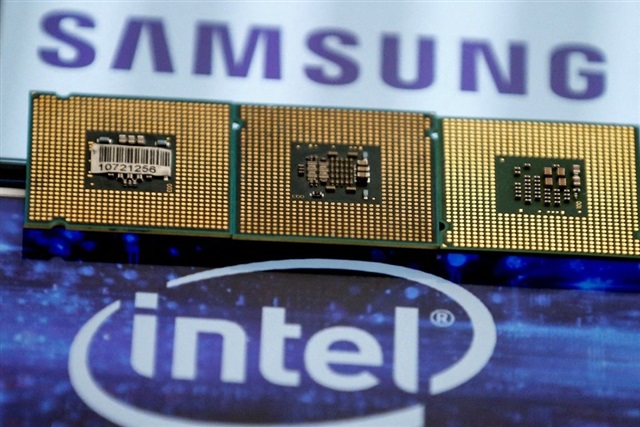
The hum of advanced lithography machines, usually a familiar backdrop to Apple’s product launches, is reportedly being joined by a more anxious undertone. Cupertino’s top brass, according to breathless reports, is in early-stage talks—not with their long-trusted partner TSMC, but with none other than Intel and Samsung. This isn’t just about adding another supplier; it’s a strategic pivot, a clear signal that the monolithic reliance on Taiwan for its A-series and M-series silicon is becoming an untenable vulnerability.
Here’s the thing: Apple, the company that redefined personal computing and mobile tech through sheer silicon prowess, is feeling the pinch. The insatiable demand for AI infrastructure, coupled with the ever-present geopolitical anxieties, has pushed even the behemoth to acknowledge its limitations. Tim Cook himself hasn’t minced words, conceding that the availability of advanced nodes—the very bedrock of modern high-performance chips—is the primary constraint, not memory or some other peripheral component. Nvidia’s CEO Jensen Huang even dropped a hint that Apple, once TSMC’s undisputed top customer, might find itself paying a premium for its slice of cutting-edge fabrication capacity.
Why Intel and Samsung? It’s a trip down memory lane, re-establishing old alliances. Samsung, of course, was the chipmaker for the original iPhone all the way up to the iPhone 5S. Intel’s x86 processors powered Macs for years before Apple’s seismic shift to its own silicon. This isn’t about nostalgia; it’s about leveraging existing infrastructure and, crucially, existing relationships. Intel, in particular, is desperate for foundry wins, and landing Apple would be the ultimate validation for its foundry ambitions. Samsung, though a distant second to TSMC in the foundry race, would gain immense credibility.
The Geopolitical Tightrope Walk
The global semiconductor supply chain has become a chessboard for geopolitical maneuvering. The concentration of advanced chip manufacturing in Taiwan is a well-documented risk, amplified by increasingly assertive rhetoric from Beijing. Apple, with its billions of devices shipped annually, can’t afford to have its production line held hostage by regional tensions or the fallout from a global economic shock. Diversifying manufacturing capabilities, even if it means working with foundries that haven’t historically been on the bleeding edge of process nodes for Apple’s most demanding chips, is a prudent, if complex, move.
It’s not a slam dunk, though. Apple’s reputation for silicon excellence is built on bleeding-edge process technology, and its historical move away from Samsung for its flagship mobile chips wasn’t arbitrary. It was driven by node advancements. Can Intel’s 18A process, for instance, truly rival TSMC’s capabilities for Apple’s most demanding applications? And can Samsung’s foundry arm bridge the gap quickly enough? These are the architectural questions lurking beneath the surface of these high-level discussions.
“Regardless of what you may feel or think, 60% coming out of anywhere is probably not a strategic position.”
That quote from Tim Cook in 2022, a candid admission about over-reliance on a single geographical region for critical manufacturing, now rings with prescient accuracy. The AI boom hasn’t just accelerated demand; it’s underscored the fragility of the existing supply chain. Apple’s bet is that by bringing Intel and Samsung into the fold, it can spread that risk, ensuring continuity even if one node in the chain falters.
Beyond the Foundry Floor: The Architectural Implications
This isn’t just about adding manufacturing capacity. It’s about potentially influencing the future architecture of chips. If Apple starts co-developing process technologies with Intel or Samsung for its M-series chips, it could lead to novel silicon designs tailored to specific manufacturing strengths. Imagine custom silicon optimized for Intel’s advanced packaging or unique fabrication characteristics of Samsung’s latest fabs. This move could usher in a new era of co-design, where the chip architect and the foundry engineer are in lockstep from conception.
However, let’s be clear: this isn’t an overnight fix. Even if deals are struck today, the ramp-up for advanced chip manufacturing takes time. We’re talking months, if not years, before consumers see the tangible benefits—or even notice any difference. The immediate impact will be on Apple’s strategic posture, its ability to negotiate from a position of greater supply chain strength, and its long-term capacity planning. The market, however, will be watching every whispered word and factory tour with hawk-like intensity.
This pursuit of diversification is more than just a business strategy; it’s a geopolitical and technological imperative. Apple is placing a significant bet on the resurgence of established players and the resilience of a multi-polar chip manufacturing landscape. Whether it pays off remains to be seen, but the tectonic plates of the semiconductor industry are definitely shifting.
🧬 Related Insights
- Read more: Edinburgh Councillors Reject ‘Green’ AI Datacenter [Key Vote]
- Read more: MI6’s Blaise Metreweli: Spies Must Code Python Like Russian Dialects
Frequently Asked Questions
What does Apple’s move mean for TSMC?
While TSMC remains Apple’s primary foundry partner for its most advanced chips, this diversification suggests Apple aims to reduce its singular dependence. It could lead to TSMC focusing on Apple’s highest-volume, most cutting-edge nodes while Intel and Samsung handle other product lines or less process-sensitive components, potentially altering the long-term revenue mix for TSMC.
Will Intel and Samsung start making iPhone chips again?
It’s possible, but less likely for the core A-series processors that demand the absolute leading-edge process nodes. These talks are more likely focused on future M-series chips for Macs and iPads, or perhaps less critical components where the absolute latest node isn’t a hard requirement. The report specifically mentions Intel’s 18A process for M-series chips, indicating a focus beyond current iPhone silicon.
Could this lead to cheaper Apple products?
In the short to medium term, unlikely. The diversification effort is primarily about supply chain security and meeting demand, not cost reduction. The investments required by Intel and Samsung to meet Apple’s stringent standards are substantial, and any initial production runs will likely carry a premium to recoup those costs and ensure quality. Long-term, a more stable and competitive supply chain could theoretically contribute to more predictable pricing, but ‘cheaper’ isn’t the immediate goal.