Here’s a question you probably didn’t know you needed to ask: Is the golden age of accessible, free FPGA design software officially over?
Because if you’re one of the millions of folks tinkering with Field Programmable Gate Arrays (FPGAs) on Linux, AMD’s latest Vivado licensing update feels a lot like getting kicked to the curb. For two decades, I’ve watched these companies roll out new products, churn out press releases thicker than my uncle’s Christmas fruitcake, and promise a brighter, more connected future. But this Vivado kerfuffle? It’s got that familiar, bitter taste of corporate maneuvering designed to squeeze a few extra bucks out of users who’ve come to rely on their generosity, or at least, their established free tier.
Let’s cut through the PR fluff. Vivado, for those not elbow-deep in silicon on a daily basis, is AMD’s — and formerly Xilinx’s — go-to software for programming these reprogrammable chips. Think of FPGAs as digital clay; you can mold them to do almost anything. Want to build a custom AI accelerator? Simulate a complex aerospace system? Or maybe just hack together a cool, bespoke piece of electronics? Vivado is the chisel. And for years, its ‘Standard’ edition was available to everyone, Windows and Linux users alike. A pretty sweet deal, frankly, especially for students and hobbyists who often operate on shoestring budgets.
The Great Linux Divide
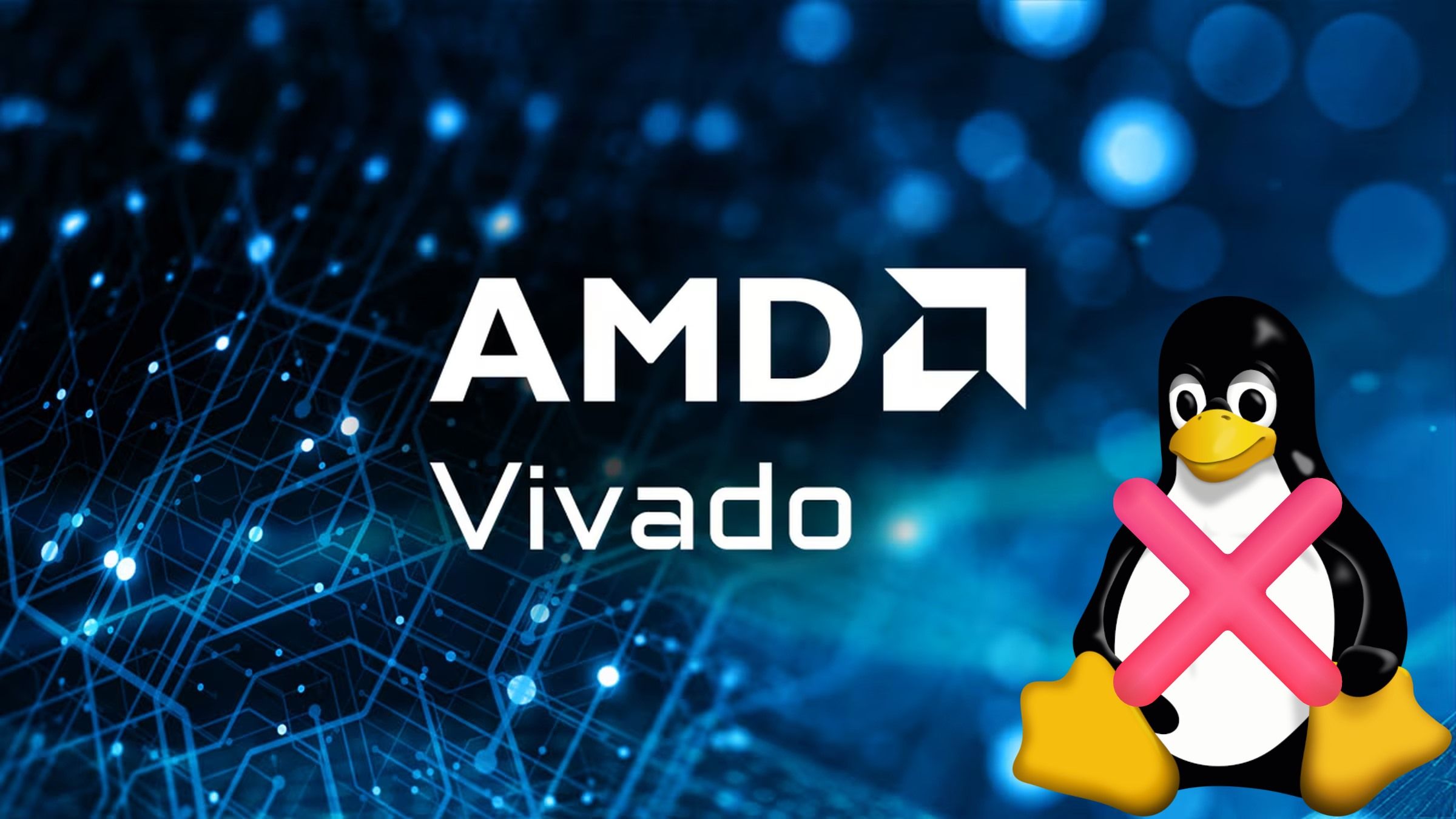
The bombshell dropped with the upcoming 2026.1 update. Suddenly, that free ‘Standard’ tier? Poof. Gone. Replaced by a ‘Basic’ tier that’s Windows-exclusive. If you’re a Linux die-hard, and let’s be honest, most serious FPGA engineers and researchers are, you’re now staring down the barrel of AMD’s ‘Core’ tier. And the price? A cool $1,200 to $1,800 annually. For software. That used to be free. It’s the kind of price hike that makes you double-check your coffee for hallucinogens.
AMD’s defense, trotted out on their own forums (where else?), basically boils down to: “Most of you are on Windows anyway.” Seventy percent, they claim. Okay, maybe. But that dismisses the significant chunk of the academic, research, and open-source community that thrives on Linux. These are the folks pushing boundaries, training the next generation of engineers, and often the ones who evangelize these tools in the first place. Alienating them with a money-grab feels… shortsighted, to put it mildly.
“No one is stopping users (students, etc.) to continue using the current versions of Vivado (any Vivado version prior 2026.1),” and developing using the free Vivado ML Standard Edition, arguing that it was only if users decided to update that they’d need the license.
Right. So, keep using an old, unsupported version of the software on an operating system they apparently don’t care about, while the cutting-edge features are locked behind a paywall. It’s the digital equivalent of being offered a slightly used, but perfectly functional, horse when everyone else is getting the new self-driving car. Thanks, but no thanks.
Who’s Actually Making Money Here?
This is where the veteran skepticism kicks in. AMD isn’t a charity. They’re a business. And for a long time, providing a free tier of Vivado for Linux was likely a calculated investment. It built a user base, fostered an ecosystem, and, frankly, kept competitors like Intel (with its Altera division) from gaining too much ground on the open-source-friendly front. But with the AI boom and the insatiable demand for custom silicon, perhaps AMD feels the use has shifted. They see dollar signs in the high-end market — the defense contractors, the big tech firms building their own AI chips, the hyperscalers. And for them, $1,800 a year for the latest tools is pocket change. The ‘hobbyists and amateurs’ AMD is now alienating? They’re just collateral damage in the pursuit of bigger fish.
The Unintended Consequences: A Flight to Competitors?
What AMD might be underestimating is the loyalty of the Linux community and the willingness of alternative FPGA vendors to capitalize on this blunder. Already, whispers are turning into outright discussions about migrating to Lattice or Intel’s Altera platforms. These companies, sensing an opportunity, might just swoop in and offer a more welcoming — and financially sensible — environment for Linux-based FPGA development. It’s a classic Silicon Valley tale: a dominant player gets a bit too smug, alienates a core user base, and a hungrier competitor picks up the pieces. This isn’t the first time we’ve seen it, and it certainly won’t be the last.
AMD says they’re collecting feedback. They say they’re passing it on. This is standard corporate speak for “we heard you, but don’t hold your breath.” Unless there’s a massive public outcry or a significant shift in their perceived market advantage, expect this tiered licensing model to stick. The question for developers isn’t if they can afford it, but if they should be paying for it at all. And if the answer is no, then it’s time to start looking at the exit signs.
**
🧬 Related Insights
- Read more: Nvidia Drops $26M on Open Agentic AI to Own the Future
- Read more: Argonne, UIC Blend AI and HPC for Science
Frequently Asked Questions**
What does AMD’s Vivado licensing update mean for Linux users?
It means the free version of Vivado will no longer be available on Linux for future updates (2026.1 and beyond). Users will need to pay for a subscription to the ‘Core’ tier, which costs between $1,200 and $1,800 annually, to use the latest features on Linux.
Will older versions of Vivado still work on Linux?
Yes, AMD states that users can continue to use Vivado versions prior to 2026.1 for free on Linux. However, these older versions will eventually become unsupported.
Are there alternatives to Vivado for Linux FPGA development?
Yes, users are already discussing alternatives like Lattice Semiconductor and Intel’s Altera FPGAs, which may offer more favorable licensing for Linux-based development.