Look, the AI world is exploding. It’s not just getting faster; it’s getting bigger. We’re talking about models so vast they need to remember entire libraries of context for every single user interaction. And right now, they’re choking on their own memory.
That’s where MinIO’s shiny new MemKV comes in. It’s not just an incremental update; it feels like a fundamental platform shift, a new layer of silicon-speed plumbing for the AI inferencing juggernauts that are powering everything from your chatbot to drug discovery simulations.
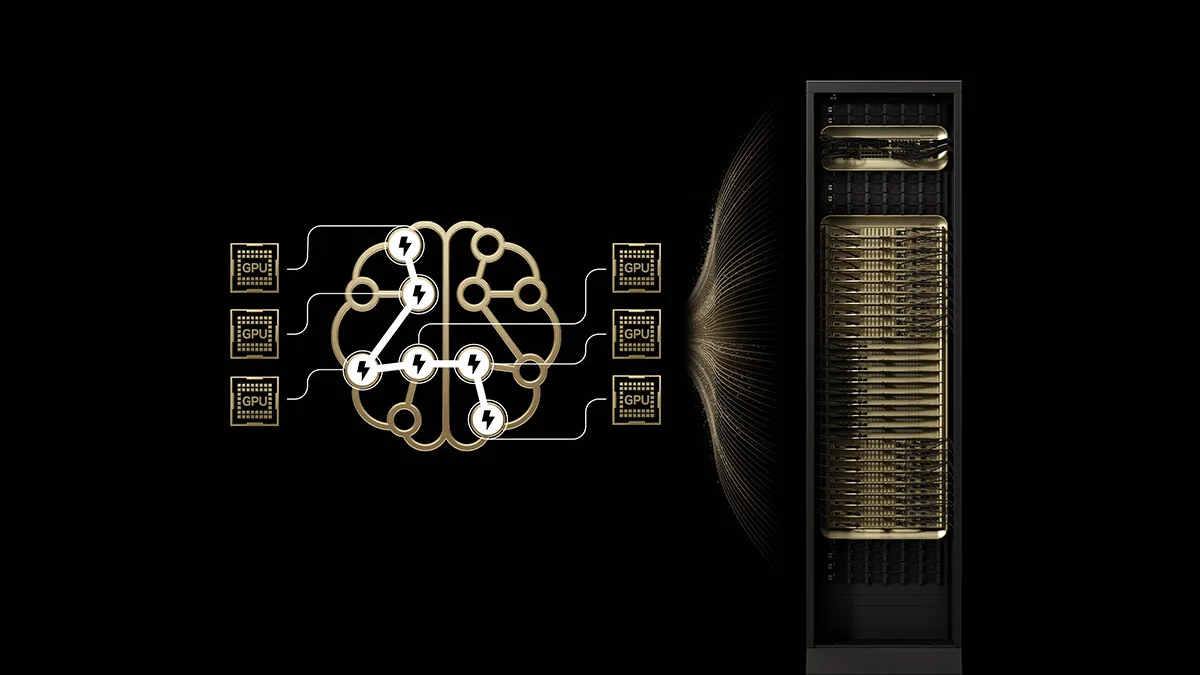
Think of an AI inference cluster as a bustling metropolis. The GPUs are the workers, constantly crunching data. The KV cache – the key-value store – is like the city’s memory, holding onto snippets of recent conversations, user preferences, and computed answers. When this memory is lightning fast (think HBM and DRAM, right next to the GPU), the city runs like a dream. But when it starts to overflow, it’s like forcing those workers to walk to the far reaches of the city to find a forgotten note. The system grinds to a halt.
Nvidia, bless their silicon hearts, saw this coming. They launched their Context Memory Storage (CMX) platform, a whole new infrastructure designed to stretch that fast memory further, using fancy DPUs and SuperNICs to connect speedy NVMe flash storage over RDMA Ethernet. It’s elegant, a vision of a hyper-connected AI city. But the hardware isn’t even shipping yet, and vendors are scrambling with workarounds.
MinIO’s approach with MemKV? It’s different. It’s like they looked at Nvidia’s grand blueprint and said, “We can build a better express train, right now, without waiting for the city to be fully rebuilt.”
The ‘3.5G’ Layer: A Speed Boost Beyond Belief
This is where it gets wild. Nvidia’s architecture has these layers: G1 is the fastest HBM on the GPU, G2 is DRAM, G3 is nearby NVMe flash, and G4 is network storage. G3.5? That’s where CMX lives, essentially making that network-attached flash act like it’s right next to the GPU, running at in-memory speeds over RDMA. MinIO’s MemKV is G3.5. It lives on those DPUs in storage appliances, and instead of relying on Nvidia’s software stack to bridge the gap, it’s building its own ridiculously fast I/O path. It’s all about minimizing the code in that critical AI inference path. Fewer lines of code, fewer chances for delay. It’s elegant in its simplicity.
“We used our experience from the past distributed file systems and S3 storage with AI Stor with persistent storage, and we came up with MemKV, which is essentially sitting in that G3.5 layer. It’s a distributed KV memory that can be addressed by all GPUs in that layer.”
This isn’t just about shaving off milliseconds; it’s about re-architecting the flow. MemKV avoids the need for a full-blown file system or object store. It’s pure, unadulterated RDMA acceleration directly to that NVMe flash. The result? Microsecond latencies. On petabytes of data. That’s like having an entire national archive accessible with the flick of a mental switch.
Why Does This Matter for AI’s Future?
The implications are staggering. MinIO claims a 50% improvement in the time-to-first-token (TTFT) metric compared to recomputing. That’s the initial response time for an AI. Imagine asking a question and getting the answer half a second faster. On a massive scale, with 128 GPUs and a gargantuan 128K token context length, MemKV can push GPU utilization from around 50% to over 90%. Do the math: that’s potentially millions in compute savings annually.
But the real kicker is what this unlocks for the next wave of AI. Think about AI agents. These aren’t just answering questions; they’re performing tasks, managing workflows, constantly generating intermediate data. Pinning that data to a single GPU’s local memory is like trying to run a global logistics network out of a single post office. MemKV, by making that distributed memory accessible to any GPU, becomes the central nervous system for these agent-based systems. It’s the difference between a smart assistant and an autonomous, world-navigating AI.
This feels like one of those moments where a new piece of infrastructure enables a whole new class of applications. We saw it with the internet, with cloud computing, and now, with AI’s insatiable hunger for memory, MinIO’s MemKV feels like it’s clearing the runway for AI’s next, truly exponential leap.
🧬 Related Insights
- Read more: Tower’s Laser Chip Promises DWDM Magic for AI Racks—Hype or Hardware Hero?
- Read more: Supplier Denies China Leak Amid Exec Lawsuit
Frequently Asked Questions
What does MemKV actually do?
MinIO’s MemKV is a software solution designed to accelerate how AI inference clusters access and retrieve data stored in their Key-Value (KV) cache. It aims to provide near-instantaneous access to large amounts of contextual data, reducing AI processing times.
Will this replace GPU memory?
No, MemKV doesn’t replace GPU memory (HBM/DRAM). Instead, it acts as an ultra-fast extension to it, bridging the gap between the fastest, most expensive memory and large, still very fast NVMe flash storage. This allows AI models to access more context without the massive latency penalty.
Is MemKV compatible with existing AI hardware?
MemKV is designed to work within Nvidia’s upcoming CMX ecosystem, running on DPUs in storage appliances. While it use RDMA for high-speed networking, its unique I/O stack offers a distinct approach compared to relying solely on Nvidia’s NIXL library. It aims to provide a high-performance solution for the CMX architecture.