Integrated. Simple. Powerful.
That’s the drum Broadcom is beating with its latest announcement: the industry’s first integrated Wi-Fi 8 System-on-Chips (SoCs). It sounds like just another spec bump, right? Another iteration in the endless march of faster Wi-Fi. But look closer, and you’ll see a deliberate architectural play unfolding. This isn’t just about raw speed; it’s about how that speed is delivered, managed, and — crucially — made more palatable for manufacturers and, by extension, consumers.
From Modular Complexity to Integrated Efficiency
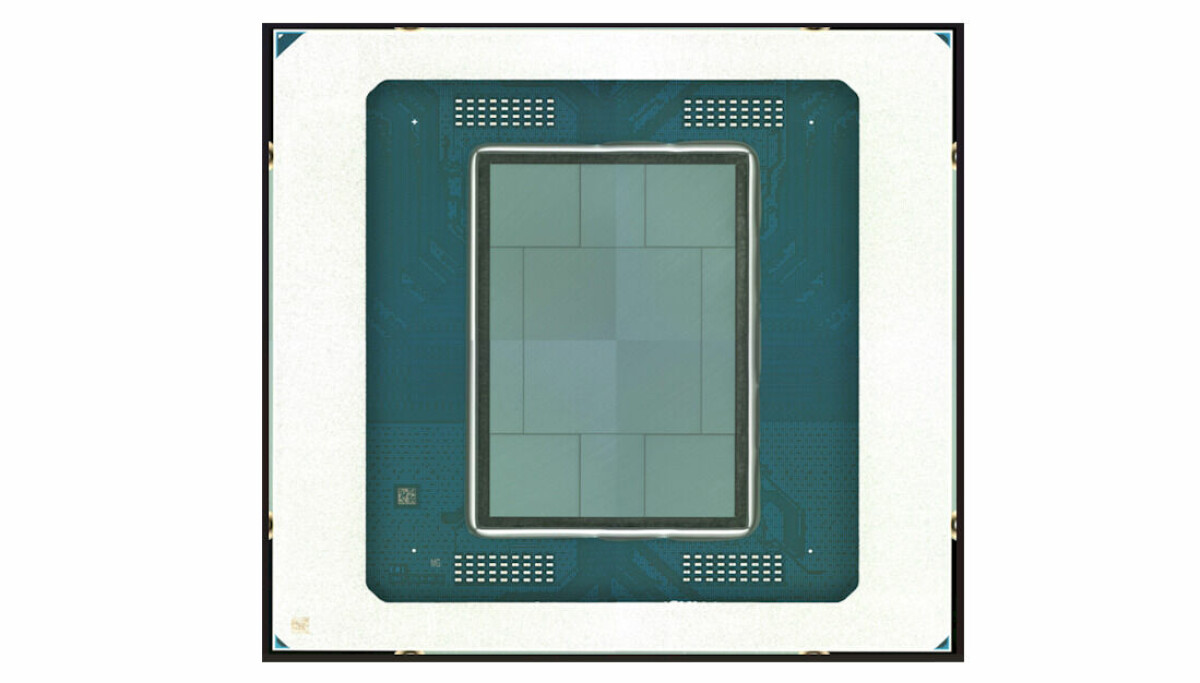
For years, the quest for peak home networking performance has involved a juggling act of discrete components. Chipsets for the Wi-Fi radio, separate processors for networking tasks, additional chips for power management, and on and on. This modular approach, while offering flexibility, introduced its own set of problems: increased board space, higher power consumption, more complex thermal management, and ultimately, a fatter bill of materials for every router and mesh node that rolled off the assembly line. Broadcom’s new BCM677x family of Wi-Fi 8 SoCs aims to dismantle that complexity, consolidating numerous functions onto a single piece of silicon.
This integration is critical for two primary applications:
- High-Performance Mesh Systems: By reducing the physical component count and heat signature, these SoCs allow manufacturers to design smaller, aesthetically pleasing mesh nodes that can be placed anywhere in the home without sacrificing best-in-class Wi-Fi.
- Multi-Gigabit Ethernet Routers: With native support for multi-gigabit WAN and LAN interfaces, these chips serve as the ideal engine for routers designed to handle fiber-to-the-home (FTTH) speeds, ensuring the wireless link never becomes a bottleneck for the wired broadband network.
The Architect’s Blueprint: Three Chips, One Integrated Vision
Across all three new SoCs, the core design philosophy remains consistent: integrate aggressively. Each chip includes a high-performance quad-core CPU complex and a dedicated Network Processing Engine. This dual-core approach is key. The CPU handles the general computational heavy lifting, while the specialized Network Processing Engine is finely tuned to offload intensive networking tasks – think packet processing, encryption/decryption, and Quality of Service (QoS) management. This division of labor ensures that even as your home network juggles more devices and more demanding applications — like 8K streaming, cloud gaming, and AI-powered smart home devices — the underlying network infrastructure remains smooth and responsive. It’s about creating a more resilient and less reactive network foundation.
And let’s talk about power and cost. The BCM677x family features on-chip 2.4 GHz power amplifiers (iPAs) and 3rd generation digital pre-distortion (DPD) technology. iPAs integrate the power amplifier functionality directly onto the SoC, saving space and reducing the need for external components. DPD is a signal processing technique that actively corrects distortions in radio frequency (RF) signals, allowing for higher transmission power with improved linearity. Together, these technologies significantly reduce the total bill of materials (BOM) and enable lower power consumption, particularly in the often-crowded 5 GHz band. This isn’t just about a greener footprint; it directly translates to lower manufacturing costs for OEMs and potentially lower energy bills for consumers over the long haul.
A Tiered Approach to Next-Gen Connectivity
Broadcom hasn’t opted for a one-size-fits-all strategy. Instead, they’re offering a tiered lineup, catering to different market segments:
-
BCM6772: This is positioned as the core foundation for mass-market Ethernet routers, extenders, and repeaters. It sports integrated 2x2 2.4 GHz and 2x2 5 GHz radios, a versatile memory controller supporting both DDR4 and DDR5, and is housed in an ultra-compact 15x15 mm FCBGA package. Think of this as the workhorse for the majority of connected homes.
-
BCM6774: Optimized for high-volume Ethernet routers and extenders, this chip bumps up the radio configuration to integrated 2x2 2.4 GHz and 4x4 5 GHz radios. This means it can support more spatial streams on the 5 GHz band, a critical factor for delivering higher throughput and better performance in congested environments. It also retains the versatile memory controller and the compact 15x15 mm package.
-
BCM6776: This is the premium offering, designed for tri-band routers and extenders (when paired with a dedicated 6 GHz radio like the BCM6718). It boasts integrated 2x2 2.4 GHz and 4x4 5 GHz radios, dual PCIe Gen3 controllers for additional connectivity options, and an even more versatile memory controller supporting DDR4, DDR5, LPDDR4, and LPDDR5. The package is slightly larger at 19x19 mm, reflecting its increased capabilities.
The Partner Echo Chamber: What Do They Really Think?
It’s standard practice for semiconductor companies to pepper their press releases with glowing quotes from partners. And Broadcom is no exception. You see the usual chorus: ASUS talking about AI and cloud gaming, NETGEAR about leading the way, Sagemcom about accelerating deployment for operators, Sercomm about homogeneous chipset architecture for Multi-AP Coordination, TP-Link about consumer expectations, and Vantiva about reducing operational complexity. While these endorsements are expected, the sheer volume and the focus on unified architectures — particularly the mention of Multi-AP Coordination by Sercomm — suggest a strong industry push toward greater standardization and software-defined networking capabilities, even at the silicon level.
“By leveraging Broadcom’s vast portfolio of integrated Wi-Fi 8 solutions, Sercomm can deliver a complete range of best-in-class, whole-home solutions built on a homogeneous chipset architecture — the foundation required to fully unlock Wi-Fi 8’s Multi-AP Coordination capabilities and give Tier 1 service providers a decisive competitive edge.”
This quote from Sercomm, in particular, is telling. It hints at a future where mesh networks aren’t just a collection of independently managed nodes, but a more cohesive, intelligently coordinated system. This level of integration at the silicon layer is precisely what enables such advanced coordination protocols to function efficiently.
The Real Shift: Beyond Raw Speed
What struck me here, beyond the expected Wi-Fi 8 buzzwords (which, by the way, bring benefits like higher spectral efficiency and improved multi-user MIMO performance), is the relentless drive toward consolidation. Broadcom isn’t just giving you a faster radio; they’re giving you a more complete, more efficient networking brain. This move towards highly integrated SoCs for the core of home networking devices isn’t entirely new, but Broadcom’s aggressive implementation with Wi-Fi 8 feels like a definitive statement.
The real impact here is the potential for democratization of advanced networking. By lowering the BOM and simplifying the design for OEMs, these chips could enable more manufacturers to build sophisticated, high-performance routers and mesh systems at more accessible price points. It also means that service providers, who are always looking to reduce truck rolls and simplify installations, will have an easier time deploying the latest and greatest connectivity to their subscribers. This move away from multi-chip solutions towards an integrated SoC approach feels like the logical next step, akin to how we saw it happen with smartphones years ago. The complexity has been absorbed into the silicon, making the external device simpler to design and build.
Why Does This Matter for Developers?
For the firmware and software developers working on these devices, this integration means a more streamlined development environment, but also potentially a more constrained one. They’ll be working with a more tightly coupled system, where the hardware and software are deeply intertwined. This can lead to faster innovation cycles and less debugging of inter-chip communication issues. However, it also means that opportunities for deep hardware customization might decrease. The focus will shift from orchestrating disparate components to optimizing the performance within the integrated architecture. Expect more work on leveraging the Network Processing Engine for custom packet handling, implementing AI-driven network optimization features, and ensuring smoothly interoperability across a wider range of Wi-Fi 8-enabled devices.
🧬 Related Insights
- Read more: South Korea’s Telcos Forced into Unlimited Data Deal After Epic Data Leaks
- Read more: ZOTAC’s 20th: RTX 50 Series Giveaways Hint at Future
Frequently Asked Questions
Will this replace my current router? This new Broadcom SoC is for manufacturers building new routers and mesh systems. Your current router won’t magically upgrade to Wi-Fi 8, but these chips will power the next generation of devices hitting the market in the coming months and years.
What’s the main benefit of Wi-Fi 8 over Wi-Fi 7? Wi-Fi 8 builds upon Wi-Fi 7’s advancements, focusing on increased efficiency, higher throughput in dense environments, and enhanced support for features like Multi-AP Coordination. Think of it as refining and expanding the capabilities introduced by Wi-Fi 7, especially for whole-home networking scenarios.
Can I buy these chips directly? These SoCs are designed for device manufacturers (OEMs) like ASUS, NETGEAR, TP-Link, and others, not for end consumers. You’ll see them integrated into the products these companies sell.