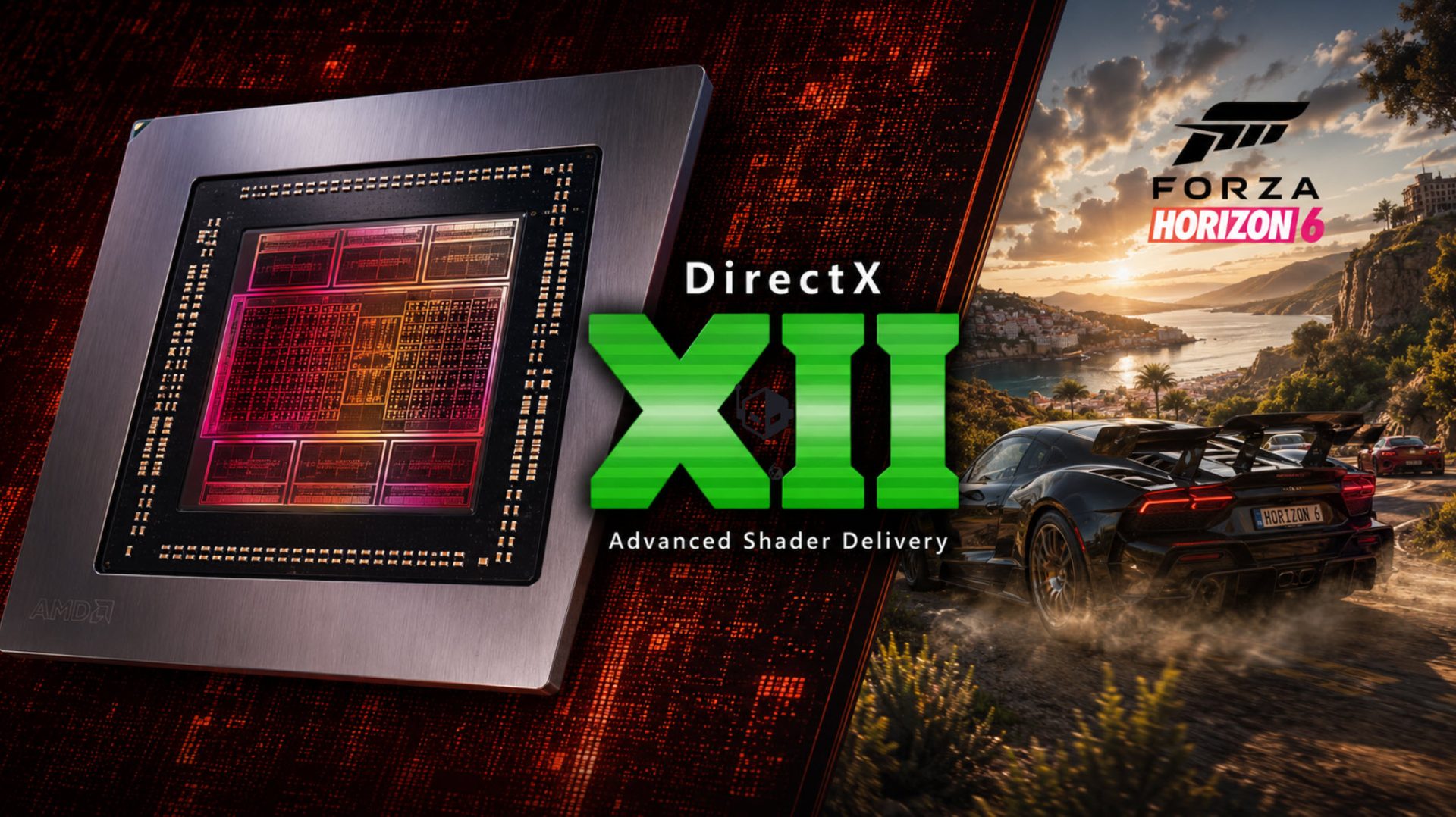
Everyone expected more incremental gains. A few percent here, a whisper of optimization there. The PC gaming landscape, particularly around graphics, has become a realm of diminishing returns for the average user. So, when word started circulating about Microsoft’s Advanced Shader Delivery (ASD) – a technology promising up to a staggering 95% reduction in game load times and substantial improvements in 1% low FPS – skepticism was the default setting. But after digging into the details and looking at the early real-world results, it’s clear this isn’t just another marketing blurb. This could be a foundational architectural shift in how games are delivered and rendered.
Shader compilation stutter. It’s a phrase that sends a cold dread down the spine of any PC gamer who’s ever launched a new AAA title only to be met with an agonizing wait as the game attempts to pre-compile its graphical assets, or worse, stutters unpredictably mid-play as new shaders are generated on the fly. It’s the digital equivalent of a chef meticulously preparing a banquet, only to realize mid-service they’ve forgotten half the ingredients and have to start chopping vegetables during the main course. First impressions, as the original report rightly points out, absolutely matter, and these technical hiccups can derail the magic before it even begins.
The culprit, in large part, is the sheer complexity of modern game engines and the Pipeline State Objects (PSOs) they rely on. These PSOs are the instructions that tell your graphics card precisely how to interpret data and render the scene. A modern game can have an astronomical number of these PSOs, making it practically impossible for developers to pre-compile every single one without astronomical download sizes or hours of waiting on the user’s end. Developers have tried workarounds, but they’re often compromises, still leaving gaps that lead to those dreaded stutters.
A Pre-Compiled Future
This is where Microsoft’s Advanced Shader Delivery steps in, not as a patch, but as a fundamentally different approach to shader management. The core idea? Distribute precompiled shaders directly with the game download. Think of it like having your entire wardrobe perfectly ironed and pressed, ready to wear the moment you unpack. No more last-minute ironing board drama.
Instead of relying on the GPU to do the heavy lifting of compiling shaders post-install, ASD offloads this process. Developers now create a State Object Database (SODB), essentially a blueprint containing all the necessary shaders. This SODB is then processed offline by Microsoft’s tools, generating a Precompiled Shader Database (PSDB). This PSDB is what gets bundled and distributed via the Xbox store, supplementing the traditional game files. When a user installs a game with ASD support, these precompiled shaders are downloaded alongside it. The result? When the game launches for the first time, all shaders are ready. The compilation step is skipped entirely. Even driver updates are managed, ensuring shader compatibility is maintained without user intervention.
Microsoft’s ambition here is nothing short of a 100% cache hit rate on the first run. If they achieve this consistently, it’s not just about saving time; it’s about delivering a consistently smooth, high-fidelity experience from the very first second of gameplay. Imagine never experiencing that initial shader pop-in or stutter again.
The idea is that developers will programmatically capture and generate a new type of asset from pipeline state object inputs, called a State Object Database (SODB.) An SODB is a SQLite3 database that contains the shaders, as well as the structure for how to group them into PSOs.
Currently, ASD is in public preview, with specific hardware requirements: Windows 11 24H2 or later, a recent Xbox Gaming Services build, the PC Gaming Preview in the Xbox Insider Hub, and importantly, AMD RDNA 3, RDNA 3.5, or RDNA 4 architecture GPUs with Adrenalin 26.5.2 drivers or higher. This limited rollout is typical for new technologies, and the emphasis on specific AMD hardware initially is a curious choice, though Intel’s own similar technology hints at broader industry interest. NVIDIA and Intel GPUs are slated for support in the near future. The visual indicator? A simple message in the launch window: ‘Precompiled shaders installed’.
The Test: Does it Deliver?
So, the theory is sound, but how does ASD hold up in the crucible of actual gaming? The original report details tests on the RX 9070 XT, a modern AMD card, across six games. The numbers are, frankly, eye-opening. Load times saw improvements up to a jaw-dropping 95%. That’s shaving minutes off initial game launches. Performance-wise, the 1% low FPS saw gains of up to 33% in some titles. This isn’t just about getting into the game faster; it’s about a demonstrably smoother, more responsive experience once you’re there. Games like Forza Horizon 5 and Sea of Thieves reportedly saw significant benefits.
This is more than just a feature; it’s a glimpse into a future where game delivery is smarter. The underlying architecture of how game assets are compiled and distributed is being re-evaluated. By shifting the computational burden of shader compilation from the end-user’s machine to offline servers and distribution networks, Microsoft is not only solving a long-standing pain point but also setting a precedent for how future games might be optimized. It’s a move that benefits not just the player, but potentially developers too, by simplifying their optimization pipeline and ensuring a more consistent player experience.
The skepticism, however, is warranted when considering the broader ecosystem. Will all game developers adopt this? How will this impact storage requirements? And critically, what about those who don’t have the latest hardware or are still on older operating systems? The current hardware requirements, while understandable for a preview, highlight a potential fragmentation issue. Will this become a “Windows 11 only” or “latest GPU only” feature, leaving a segment of the PC gaming community behind? The promise is immense, but its universal adoption and long-term impact will depend on how well Microsoft and the wider industry can navigate these challenges. It’s a bold step, one that could redefine PC gaming’s initial impression.
Is this a genuine leap forward, or just another incremental optimization dressed up in new packaging? The early data strongly suggests the former. If ASD can scale effectively and gain widespread adoption, it could very well become an indispensable part of the modern PC gaming experience, finally putting an end to shader stutter and those infuriatingly long load screens.
🧬 Related Insights
- Read more: Snapdragon X Elite: A $1,600 Gamble for Windows on ARM’s Soul
- Read more: NVIDIA RTX 5090 Skyrockets Past $4,000 Amid VRAM Chaos
Frequently Asked Questions
What are Pipeline State Objects (PSOs)? Pipelines State Objects (PSOs) are sets of instructions that define how a graphics card processes data to render a scene. They include information on shaders, textures, and rendering states. Modern games have a vast number of PSOs, leading to compilation issues.
Will Advanced Shader Delivery improve my existing games? Advanced Shader Delivery only works for games that have been specifically updated by their developers to support the feature. It’s not a universal fix for all titles currently installed on your PC.
Can I use Advanced Shader Delivery on NVIDIA or Intel graphics cards? Currently, Advanced Shader Delivery is primarily focused on AMD GPUs, with support for NVIDIA and Intel cards expected in the near future. Intel already has a similar technology on its own hardware.