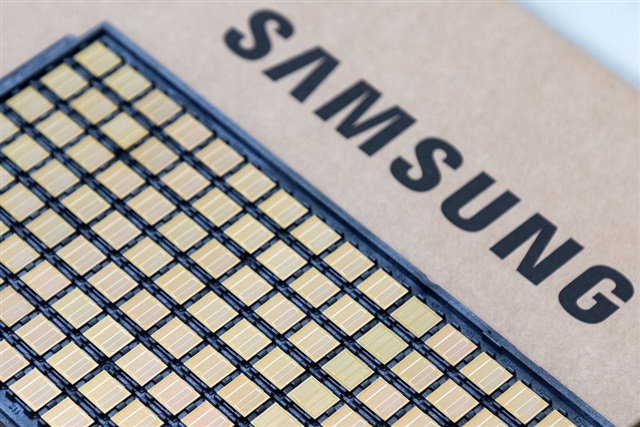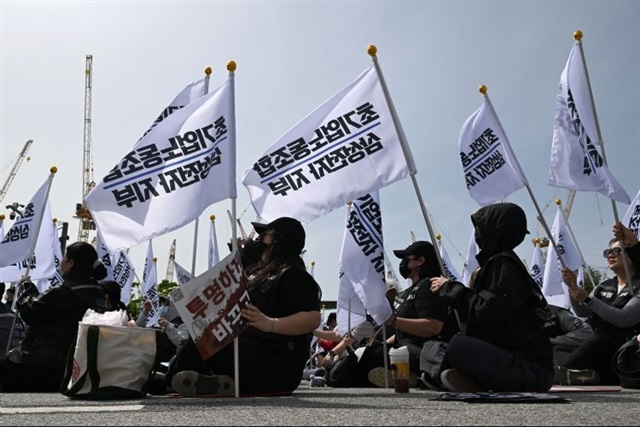
Here’s the thing: a potential strike at Samsung Electronics, the world’s largest memory chip maker, has suddenly injected a fresh layer of volatility into an already precarious semiconductor market. We’re not talking about a minor hiccup here. This is about the potential for significant supply disruption at a time when demand for memory — particularly for AI-driven applications — is surging. And that’s a recipe for price spikes.
It’s easy to dismiss labor disputes as purely internal corporate affairs. But when the company in question is Samsung, and the product is DRAM and NAND flash, the ripples are felt globally. Think about it: Samsung commands a colossal share of the memory market. Any sustained disruption to their production lines, even a partial one, directly impacts the global supply-demand balance. We’ve already seen AI hardware demand push up costs for components like high-bandwidth memory (HBM), and a strike only pours gasoline on that fire.
The AI Premium on Memory
The core driver here is the insatiable appetite for AI. Every new server, every advanced AI model, requires more and more sophisticated memory. This isn’t just about capacity; it’s about speed and specialized architectures like HBM. So, when we talk about memory pricing, we’re increasingly talking about the pricing of AI-ready silicon. And any threat to that supply chain is a direct threat to the pace of AI development and deployment. If Samsung’s production falters, competitors will struggle to pick up the slack quickly enough, leading to higher prices and potentially longer lead times for crucial AI infrastructure components.
It’s a feedback loop that investors and IT infrastructure planners are watching with hawk-like intensity. The economic impact of a prolonged work stoppage could be substantial, not just for Samsung’s bottom line but for the entire tech ecosystem that relies on its output. We’re talking about everything from consumer electronics to the massive data centers powering cloud services and AI research.
A History of Volatility
This isn’t the first time supply chain turbulence has hit memory markets. We’ve seen boom-and-bust cycles driven by oversupply, undersupply, and geopolitical events. But the current AI-fueled demand surge presents a unique challenge. Unlike previous cycles where demand was more broadly distributed, the current intensity is concentrated around the high-performance segment needed for advanced computation.
“The potential for a strike at Samsung adds another variable to an already complex pricing environment for memory chips. We’re closely monitoring the situation as it could lead to further supply constraints, especially for high-bandwidth memory essential for AI applications.”
That quote, from an industry analyst whose firm tracks semiconductor markets closely, sums up the prevailing sentiment. It’s a cautious outlook, tinged with the recognition that things could get significantly tighter. The market isn’t built to absorb sudden shocks from its largest supplier without consequences.
What It Means for Prices
So, what’s the bottom line for the average buyer or the enterprise making infrastructure purchasing decisions? Brace for potential price increases and longer wait times. If a strike does materialize and persists, expect memory chip prices to tick upwards. This isn’t just speculative; it’s a direct consequence of reduced supply meeting sustained or increasing demand. Companies that were already facing extended lead times for hardware might find those timelines stretching even further.
The strategic implications are also worth considering. For years, the industry has grappled with the consolidation of memory manufacturing into the hands of a few major players, primarily Samsung, SK Hynix, and Micron. This concentration, while efficient in some respects, creates single points of failure. The potential for a Samsung strike underscores the inherent risks in such a concentrated market. It forces a re-evaluation of supply chain resilience, pushing companies to consider diversification strategies, though that’s a long-term play.
Beyond the Strike
Even if a strike is averted through swift negotiation, the underlying pressure on memory pricing won’t disappear. The AI revolution isn’t slowing down. The demand for more powerful, faster memory solutions will only intensify. Manufacturers will need to balance increased production with the imperative to innovate and develop next-generation memory technologies.
The semiconductor industry operates on razor-thin margins and highly complex manufacturing processes. A labor dispute is the last thing it needs. It’s a stark reminder that human factors – the people who design, build, and maintain these sophisticated fabs – are as critical to the supply chain as the silicon itself. The tech world needs its memory chips. And it desperately needs Samsung’s fabs to keep humming.