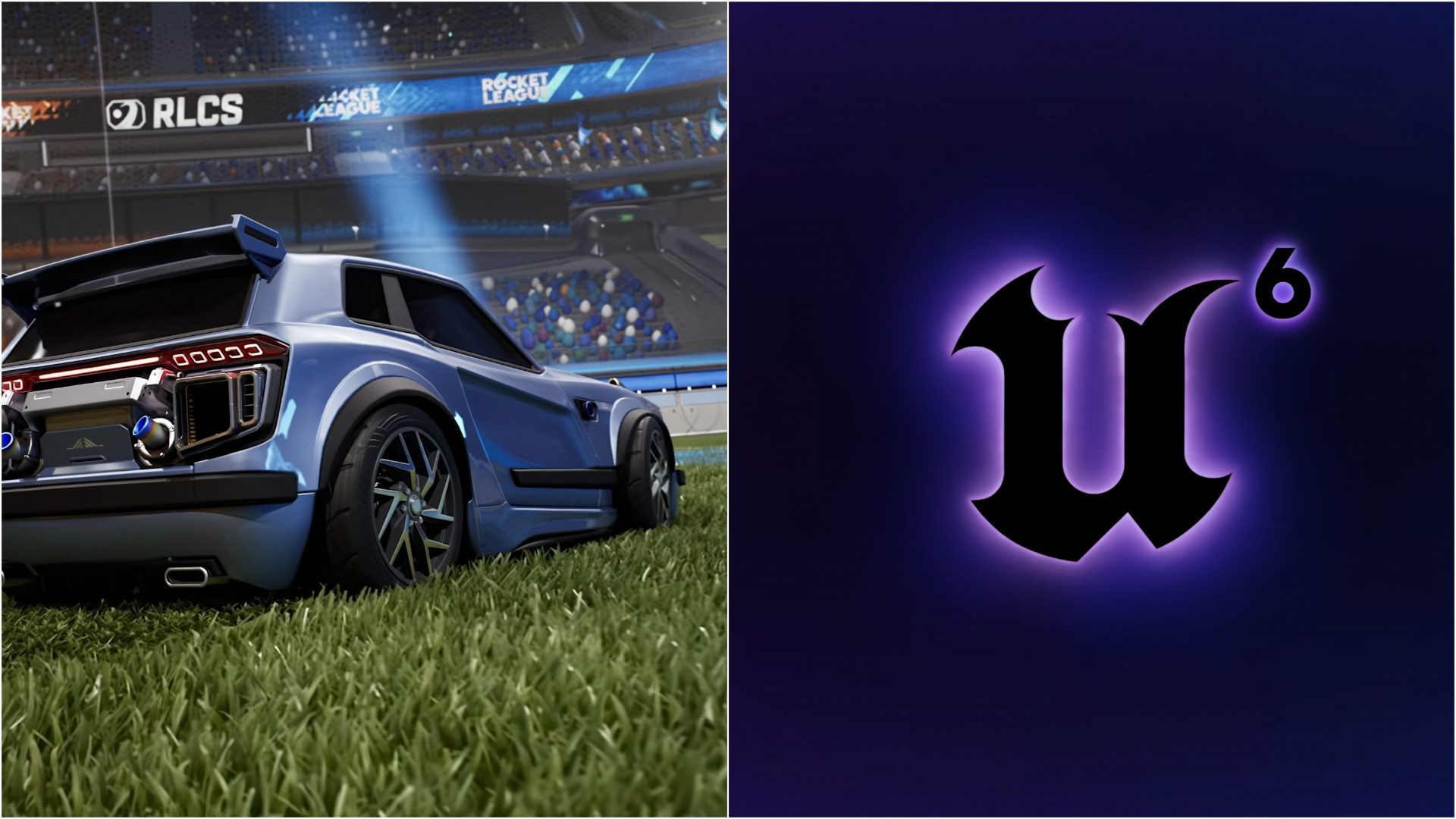
Is your game engine secretly a one-trick pony? For years, Unreal Engine has churned out stunning visuals, but beneath the surface, a fundamental problem has festered: its stubborn reliance on single-threaded simulation. Now, Epic Games is finally waving the UE6 flag, and surprise, surprise, Rocket League is getting the first taste.
This isn’t just about faster rendering or shinier polygons. This is about tackling the engine’s long-running single-threaded simulation bottleneck by migrating toward multithreaded game simulation. For anyone who’s wrestled with Unreal’s concurrency issues, this is the news they’ve been waiting for. And for the rest of us? It means games that can handle more complexity, more players, and more sheer digital chaos without tripping over themselves.
Tim Sweeney, Epic’s overlord, hinted a while back that UE6 was “a few years away,” with preview versions perhaps gracing us in two to three years. But the Rocket League Championship Series reveal in Paris suggests that timeline might be… optimistic. We could see those preview builds sooner than expected, maybe even next year. Don’t hold your breath, though. Epic’s never been one for firm deadlines when a good tease is available.
So, what’s the grand vision for UE6? Sweeney wants to unify Epic’s fractured development ecosystem. Think Unreal Engine and Fortnite’s creator tools playing nice, sharing the same foundation. It’s about making the engine more accessible for creators while simultaneously excising the technical friction that’s accumulated over the years. The goal is a future where gameplay systems can be tinkered with and combined without developers having to play whack-a-mole with threading problems.
It’s a noble pursuit, but let’s be frank. Epic’s history with Unreal Engine reveals is a slow burn. They unveiled UE5 in May 2020, got an Early Access build out in May 2021, and then the full, production-ready version finally landed in April 2022. That’s nearly two years from announcement to widespread availability. Applying that same glacial pace to UE6 means we’re likely looking at a 2026 or 2027 release for the truly production-ready version, despite this early Rocket League tease.
Sweeney also said UE6 is meant to unify Epic’s many current development branches and finally address the engine’s long-running single-threaded simulation bottleneck by moving toward multithreaded game simulation.
This isn’t just about the big AAA studios. The push for multithreading and better integration with Verse—Epic’s gameplay-programming language—could profoundly impact the burgeoning metaverse and user-generated content platforms. If UE6 can genuinely deliver on making complex simulations manageable and its creator tools more cohesive, it might just become the bedrock for whatever digital frontier Epic is building.
But here’s the rub: Epic’s PR machine is in full swing. Rocket League is the shiny new toy, the harbinger of doom for single-threaded engines. Yet, details are thinner than a cheap pizza. We’re left to parse Sweeney’s pronouncements and extrapolate from past timelines. It’s a classic move – generate buzz with a high-profile reveal, then let the rumor mill churn. Will UE6 finally fix Unreal’s threading headaches? The promise is there. The execution? That’s the billion-dollar question, and it’ll take more than a Rocket League cameo to convince this jaded critic.
It’s easy to get excited by promises of multithreading Nirvana. But remember, the path from engine reveal to a stable, production-ready build is a marathon, not a sprint. Epic’s got a mountain to climb, and while Rocket League might be their Sherpa, the summit is still a long way off. Still, it’s progress. And in the relentless march of game development, that’s often the best we can hope for.
The Multithreading Conundrum
Why is multithreading such a persistent dragon for game engines? Simply put, most game logic—AI, physics, character actions—happens in a sequence. Imagine a chain reaction; if one link is slow, the whole chain grinds to a halt. Modern CPUs have many cores designed to tackle tasks in parallel, but making game logic play nicely with all those cores without breaking everything is a monumental engineering challenge. It’s like trying to get an orchestra to play a symphony where every musician decides their own tempo and rhythm. Unreal Engine 5 has made strides, but it’s clearly still bumping up against the limits of its older architecture when it comes to complex, dynamic simulations. UE6 aims to rip out that old architecture and build something fundamentally more concurrent from the ground up. That’s ambitious. And ambitious is often just another word for difficult.
When Will We See It?
Epic Games is playing coy, but the Rocket League reveal suggests preview versions of Unreal Engine 6 could be available as soon as next year. However, a full, production-ready release akin to UE5’s 2022 debut is likely still a couple of years away, potentially landing in 2026 or 2027 based on historical release cadences.